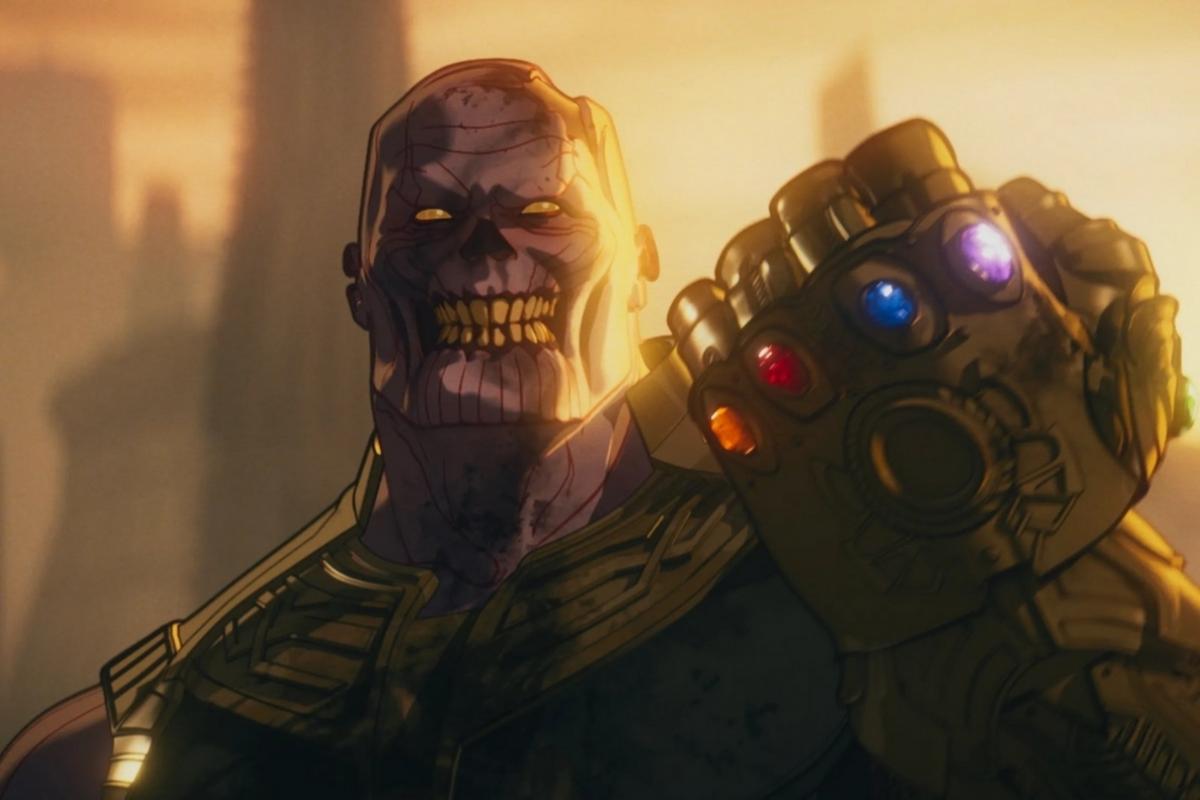


New technologies led by artificial intelligence and virtual production are profoundly changing visual effects but are still “another paintbrush” in the service of storytelling, says VFX veteran George Murphy.
“Virtual production is not just a tool for VFX; it’s a storytelling tool that allows actors to feel fully immersed in the scene, instead of having to imagine everything against a blank screen,” Murphy tells The Hollywood Reporter, in an interview at the Tokyo International Film Festival ahead of appearing on the Motion Picture Association panel, Filmmaking 2.0: The Evolution of Real-Time VFX for Traditional Filmmakers.
Murphy, a VFX supervisor and creative director at DNEG in London, made his entry into filmmaking with Steven Spielberg’s Hook (1991), a production hailed for its seminal VFX, in particular the use of projected matte painting. Computerized effects were very much in their infancy when he joined Industrial Light & Magic (ILM). He was part of a small team that pioneered digital compositing for films and he quickly recognized the potential of these ground-breaking tools to transform filmmaking.
“At ILM, we worked with Unix scripts and early computer graphics programs, but it was clear that these tools could create more believable, integrated images than anything before,” he says.
Murphy’s background was in another visual medium. “I started out fully intending to be a freelance photojournalist, covering the real world,” he recalls. “In an odd way, it was those skills in capturing reality that prepared me for fabricating worlds that don’t exist.”
Creating those worlds and making them look believable won him an Oscar and BAFTA for Forrest Gump, and has seen him supervise effects on productions including Planet of The Apes, Mission: Impossible, Jurassic Park, The Matrix sequels and Black Sails.
One of the biggest game-changers in recent years has been the development of virtual production, says Murphy. This technology, popularized by The Mandalorian, allows filmmakers to create virtual environments on LED screens in real time, replacing traditional green-screen backdrops.
Murphy experienced the power of this technology firsthand on the set of Murder on the Orient Express back in 2016, where a train car was surrounded by LED screens displaying high-resolution footage of the world speeding by. “The actors didn’t have to pretend they were looking out at a snowy mountain scene. They were immersed in it, and that makes a huge difference in their performance. Things that were going past would actually catch their eyes,” he notes, saying it led to a more authentic feel and therefore immersive experience for the audience as well.
Responsive tools like Epic Games’ Unreal Engine and Unity have also revolutionized the VFX workflow. “These tools allow us to create, edit, and test our work in real-time, which wasn’t possible a decade ago. You can see the result instantly instead of waiting hours for a render,” Murphy explains.
He likens this change to moving from analog to digital photography: “The whole process has become much more flexible and collaborative, allowing us to explore creative choices and see what works best in the moment.”
With AI advancing at a bewildering pace, it is quickly finding a place in the VFX toolkit. For Murphy, AI offers both opportunities and challenges. He points out that AI can streamline labor-intensive tasks like rotoscoping (manually isolating elements within a scene) or tracking (following a moving object or character in footage).
“With AI, we can now accomplish in minutes what used to take hours or even days,” he says. “It frees up artists to focus on the more creative aspects of their work”
Nevertheless, he believes that for all its power, machine learning isn’t a substitute for the creativity and ideation of a filmmaker, for now at least. “AI can process huge amounts of data, and it can imitate styles based on what it’s seen. But it doesn’t experience emotions, so it can’t capture the essence of human storytelling. That’s something only artists who have lived and felt can bring to a project,” he suggests.
Another exciting development for Murphy is the expansion of storytelling across different media and platforms. During his work on The Matrix sequels, he witnessed the potential of what he calls “story worlds.” The Matrix franchise extended its narrative through video games, animated shorts, and comics, allowing fans to explore the story beyond the main films. Murphy sees this approach as crucial for the future of entertainment, as audiences look for ways to engage more deeply with stories.
This “multiverse” approach to storytelling has become increasingly popular, especially with the rise of streaming and interactive platforms. Murphy believes that as technology advances, audiences will be able to interact with story worlds in new ways—perhaps even experiencing them in virtual reality or augmented reality. “We’re only scratching the surface of what’s possible,” he says. “Once VR becomes more accessible, the way we tell and experience stories is going to change fundamentally”
Looking forward, Murphy is enthusiastic about the possibilities that technology opens up but also concerned about the potential loss of craftsmanship.
“There’s an artistry to physical effects, to building something by hand, and that’s still incredibly valuable. It gives you a grounding in reality that’s essential, even in digital work,” he explains, adding that many of the best physical model makers went on to VFX careers.
Ultimately, Murphy believes that technology should serve the story, not the other way around, and remains optimistic about the future of filmmaking.
“These tools are just new brushes in our paintbox,” he says. “They allow us to push the boundaries of what’s possible. But the artist’s hand will always be there, guiding the story and making sure it resonates with the audience.”