
BBC America
Television’s a delicate medium. A show can capture the public’s attention for years, only to squander it all with one poorly written season. Such is the case with shows like “Game of Thrones,” “How I Met Your Mother,” and “Lost,” which ruled the zeitgeist for years before their endings alienated many diehard fans. In some cases, these reputation-destroying moments all came down to a single episode that not only disappointed fans but ruined earlier seasons in retrospect.
These 15 shows all have one thing in common: Their final episodes were highly anticipated, but left fans with a sour taste in their mouths. For some of these shows, their misguided finales have become inseparable from their own legacies, even the shows that had massive ratings during their heyday. It’s always hard to stick the landing in a television show’s final season, but if there’s any goal not to aim for, it’s these finales.
St. Elsewhere
NBC
When you think of TV’s most shocking moments in recent years, you probably think of the unexpected death of a beloved character, or a time jump that shakes up a show’s status quo for good. However, it’s unlikely that a show will take as big a swing in its finale as “St. Elsewhere,” an NBC medical drama that aired from 1982 to 1988. It was an incredibly grounded show following the employees at St. Eligius Hospital in Brooklyn, with its cast including Ed Flanders, Howie Mandel, Ed Begley Jr., Norman Lloyd, and Christina Pickles.
The show’s series finale, “The Last One,” provided one of the most talked-about and divisive endings in television history, where it’s revealed in the final moments that the entire show supposedly took place in the mind of Tommy Westphall, an autistic boy living with his father (a construction worker, played by Flanders) and grandfather (played by Lloyd) who owns a snowglobe containing the St. Eligius building. Not only did this scene completely undermine the entire show, but it calls into question the “existence” of several other shows due to “St. Elsewhere” having done crossover specials.
Battlestar Galactica
Sci-Fi
The Sci-Fi channel’s “Battlestar Galactica” series from 2004 was a reboot of an ABC series, which ran for only one season in 1978 before being canceled. In that series finale, which aired in 1979, the crew of the titular spaceship picks up radio transmissions from the Apollo 11 moon landing, firmly placing the show not in the distant future but in the recent past. For the series finale of the 2004 reboot, a three-part episode titled “Daybreak,” they took similar cues in revealing the Battlestar Galactica’s place in human history, but with less successful results.
Most of “Daybreak” revolves around Hera, the first-ever child born between a human and a Cylon, who has been captured by the Cylons for scientific experimentation. The Galactica crew just narrowly rescues her from a colony near a black hole before settling on a nearby planet, which happens to be Earth. That could’ve served as a decent ending, were it not for a coda that flashes forward to the 21st century and ends with a ham-fisted montage on how humans are mistreated by technological innovation. No wonder Peacock canceled another “Battlestar Galactica” reboot.
Gossip Girl
The CW
In theory, the “Gossip Girl” series finale should’ve been the ultimate fan service. “New York, I Love You XOXO” sees both of its series leads, Serena van der Woodsen (Blake Lively) and Blair Waldorf (Leighton Meester), marry their respective long-time love interests, Dan Humphrey (Penn Badgley) and Chuck Bass (Ed Westwick). However, it’s probably more memorable for its bombshell twist: The Gossip Girl blog was being run by none other than Dan, who used it to write himself into the drama of the Upper West Side and get closer to Serena.
While some critics felt this twist was appropriately satisfying, as opposed to revealing that Gossip Girl was an unseen character all along, it opens up a few plot holes that are just too glaring to ignore. Not only are there many inconsistencies to Dan being Gossip Girl, but it makes his so-called “love story” with Serena creepy and stalker-ish. The fact that the very last moments of the finale depict Serena still marrying Dan after revealing that kind of behavior toward her is a huge red flag, but maybe not a surprising one given what we know about Serena’s own personality.
Chuck
NBC
“Chuck” had a long road to its series finale, with each season seeing it nearing cancellation, were it not for fan outcry keeping it on the air. The NBC spy show finally ended on its own terms in 2012 with the series finale “Chuck Versus the Goodbye,” though not without angering fans of its central romantic couple: Chuck Bartowski (Zachary Levi) and Sarah Walker (Yvonne Strahovski). The final episodes of “Chuck” see Sarah having her memories wiped by Quinn (Angus Macfayden), forgetting about her entire relationship with Chuck.
The series ends with a question mark as Chuck encounters Sarah, who has left him to “find herself” following her losing her memories of him, on the same beach from the pilot. Chuck floats an idea by her that “one magical kiss” could jump start her memories, and he implores her to try. They kiss and then… fade to black. Although the showrunners and Levi are optimistic about the characters’ future together, ending this series-long romance on such an ambiguous note rubbed a lot of fans the wrong way.
Dexter
Showtime
Coincidentally, Yvonne Strahovski was part of another show with a vehemently hated series finale: Showtime’s “Dexter,” the story of a forensic technician who moonlights as a serial killer (albeit a hero in his own eyes), evading capture and justice for his psychopathic tendencies. Many fans agree that the worst season of “Dexter” was its final one, thanks in part to its series finale in which Dexter (Michael C. Hall) kills his sister Debra (Jennifer Carpenter) and then drives a ship into a hurricane, presumably dying.
Only, Dexter somehow didn’t die. The show’s final scene reveals a bearded Dexter hiding out in Oregon, working at a lumbering company. Many critics felt that, even considering the show’s decline in quality, the finale felt cheap and, at times, cartoonish in just how unexplainable Dexter’s motives had become. It’s no surprise that, to remedy fans’ disappointment, there has been not one, not two, but three spin-offs, two of which continue from where the events of the notorious “Dexter” finale left off.
True Blood
HBO
“True Blood” was a huge hit for HBO while it was on, garnering critical acclaim and high ratings, but by its final seasons, critical approval had begun to decline. The “True Blood” ending, titled “Thank You,” was especially misguided as the showrunners opted not to give fans a clear-cut answer as to who Sookie (Anna Paquin) ended up with, despite her love triangle with Eric (Alexander Skarsgård) and Bill (Stephen Moyer) being a driving force of the series’ previous seasons. Furthermore, Sookie’s the one who drives a stake into Bill’s heart and kills him once and for all.
The show had been campy from the beginning, but a happy-go-lucky ending where humans and vampires get to share a literal Thanksgiving dinner together? Most fans agreed that was a bridge too far in the show, which up to that point had been rife with violence, explicit sex, and incredibly dark themes about oppression and class struggle. There wasn’t much left for fans to care about by the end, and as for what they did care about, the finale didn’t bother giving them what they wanted or needed.
The Man in the High Castle
Amazon Prime Video
Prime Video’s “The Man in the High Castle” is based on a novel by Philip K. Dick, but the series’ ending in Season 4 differs greatly from the content of its source material. The drama series explores an alternate history where the Axis Powers won World War II, only for rebellion to begin when a series of films reveals the existence of other timelines in which the actual events of World War II did, in fact, take place. This is the major twist that the book ends on, but the series ends on a much different, albeit slightly more optimistic note.
In the series finale, “Fire From the Gods,” the rebellion successfully derails a Nazi train, forcing Fuhrer John Smith (Rufus Sewell) to die by suicide in front of Juliana (Alexa Davalos). A portal then opens, letting in hundreds of people from other realities, but their identities are never revealed, and the series ends right then and there. Even the closure of Hawthorne (Stephen Root) meeting the alternate reality version of his deceased wife isn’t really fulfilled. Ultimately, it felt like a premature ending to a show that still had a lot of steam left in the engine, leaving fans feeling underwhelmed after four seasons of anticipating how it would wrap up.
The 100
The CW
By the time “The 100” reached its final season, it had already lost a lot of goodwill with fans. The CW series, centered on a group of 100 humans returning to Earth after a nuclear holocaust, garnered controversy during its third season when fan-favorite character Lexa was killed off shortly after her queer identity was confirmed. Despite complaints from upset fans, the show continued on, and “The 100” didn’t end until Season 7.
Sadly, that last episode didn’t do much to win back fans who’d already felt betrayed by the show’s choices in previous seasons. Namely, the finale introduces a whole new character in The Judge, an extraterrestrial being who’s come to determine which of the surviving characters are worthy of remaining on Earth. If that weren’t infuriating enough, The Judge at one point takes on the physical appearance of Lexa, which was just the ultimate insult to fans who felt the character was treated poorly by writers.
Killing Eve
BBC America
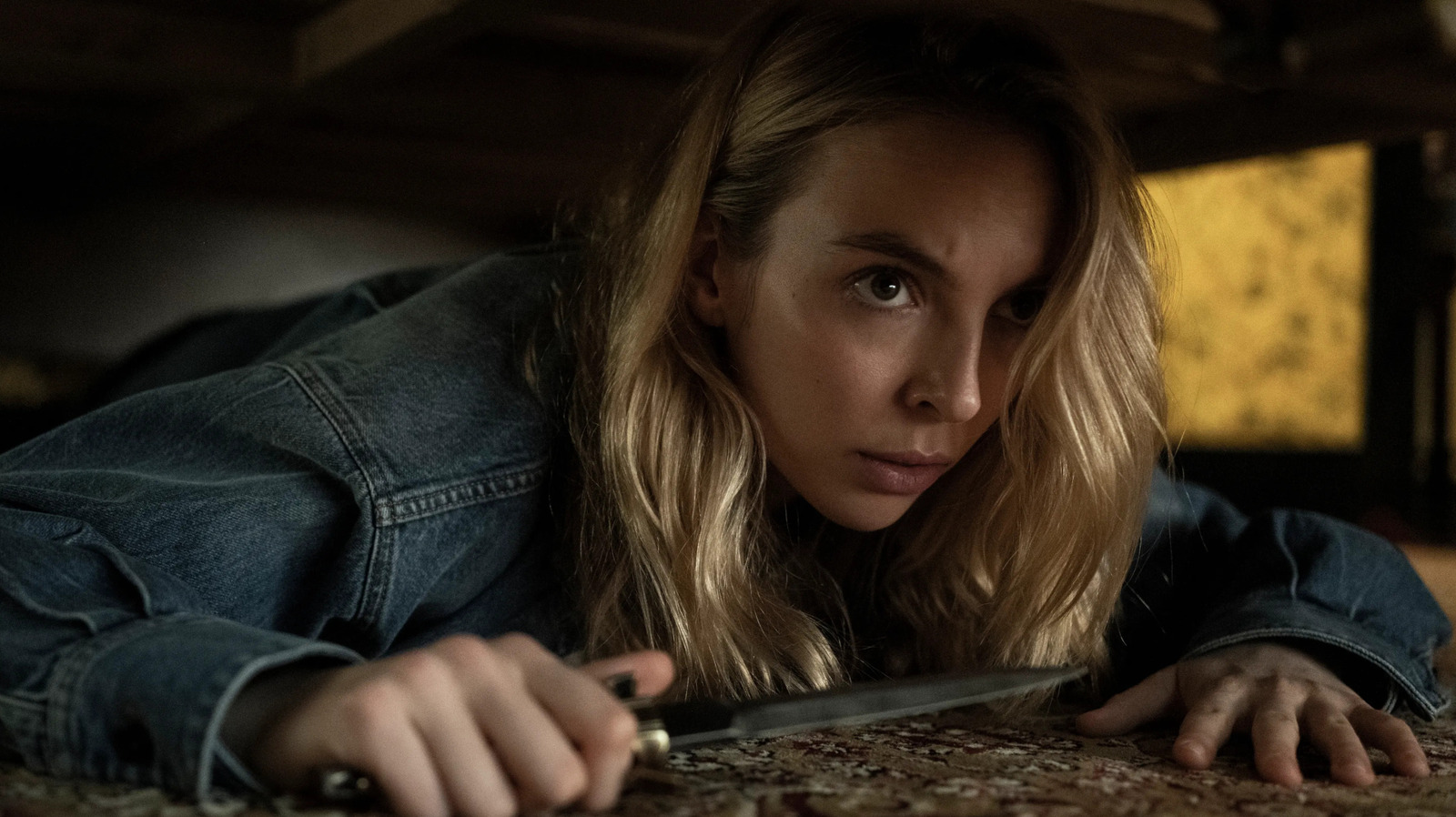
When “Killing Eve,” based on a series of novels by Luke Jennings, first premiered, it seemed like the world of television had found its new violent obsession post-“Game of Thrones.” Sadly, it turned out to be a misguided idea to hire a new showrunner each season, turning its intriguing Phoebe Waller-Bridge-led first season into a disastrous fourth season from Laura Neal. The “Killing Eve” series finale, “Hello, Losers,” was the last straw for many fans when, after finally embracing their love for each other, Villanelle (Jodie Comer) and Eve’s (Sandra Oh) romance was cut drastically short.
After slaughtering most of the Twelve, Villanelle was unceremoniously shot by a sniper hired by Carolyn (Fiona Shaw), pulling Eve into the Thames River with her to save her life. Sure, the fate of Comer’s beloved psychopathic assassin may have been deserved after all the horrible things she’d done, but having the series cut to black literally seconds after with no closure for Eve? It was yet another “bury your gays” trope come to life, and fans have still not let it go to this day.
She-Hulk: Attorney at Law
Disney+
It’s a cold take at this point that most of the Marvel Cinematic Universe shows on Disney+ tend to have disappointing season finales, but none feel like more of a betrayal than “She-Hulk: Attorney at Law.” The series set a new tone for itself right from the get-go, starring Tatiana Maslany as Jennifer Walters, the fourth-wall-breaking cousin to Mark Ruffalo’s Bruce Banner, who, after a car accident, ends up coming into contact with Bruce’s gamma-radiated blood and morphs into She-Hulk, having to live a double life as a lawyer while adapting to her newfound powers.
The series sets up a villain plot involving a scorned date of Jen’s (Jon Bass), who targets She-Hulk with online hate and steals her blood to turn himself into a Hulk. However, the plotline’s flaws are exposed when Jen breaks the fourth wall and leaves the show via Disney+, storming into Marvel Studios and confronting their A.I. leader K.E.V.I.N. (a parody of Kevin Feige), demanding a better climax. Only, that better climax never comes, and the show just skips ahead to everything being fine and dandy in Jen’s world, which leaves the audience wondering: What was the point of anything we’ve watched?
Ozark
Netflix
If we can give the Netflix series “Ozark” credit for anything, it’s introducing the film and TV industry to Julia Garner. After all, she won three Emmys for her portrayal of Ruth, the petulant crime daughter who allies with Marty Byrde (Jason Bateman) and his family in their money laundering business. The show was an awards darling for pretty much its entire run, but it was the controversial ending twist involving Ruth that soured many fans on “Ozark” as it wrapped up its two-part fourth season.
Unfortunately for “Ozark” fans who had only stuck around because of Garner’s character, Ruth was killed off in the final moments of the series finale, “A Hard Way to Go,” while Marty and his wife Wendy (Laura Linney) got away. Although showrunner Chris Mundy defended the decision to give Ruth her just desserts, many fans were upset that they opted to give easily the most popular character on the show an unfair death right at the end.
Search Party
HBO Max
“Search Party” had a simple enough premise when it started: Dory (Alia Shawkat) becomes obsessed with investigating the disappearance of an old friend from high school, roping in her friends Drew (John Reynolds), Portia (Meredith Hangar), and Elliott (John Early). The investigation then unravels into a comedy of errors over the course of five seasons that, by its finale, is unrecognizable to the first episode. There’s murder, kidnapping, and cults involved, and by the “Search Party” series finale, a full-blown zombie virus has been unleashed in New York City thanks to Dory’s psychotic breakdown.
But even if this were a bridge too far even for the most ardent fans of “Search Party,” all the steam is taken out of the apocalyptic finale with a good old time jump to years later, in which the zombie outbreak is under control, and Dory and her friends are all living idyllic lives in New York City, whilst hundreds of people remain missing as a parallel to the pilot. The only question is… has any of this meant anything?
Attack on Titan
NHK General TV
In a sense, the creators of the “Attack on Titan” television show didn’t have too much work to do, considering the anime is a faithful adaptation of a Japanese manga series. Nevertheless, it took three years for the fourth and final season to finish airing, with the finale, “Toward the Tree on That Hill,” airing more than a decade after the show first premiered. Though the decision to open the fourth season with a time jump and a whole new cast of characters was divisive among fans, many held out hope that it would all wrap up nicely in its remaining episodes.
However, all that fans were left with at the end of “Attack on Titan,” much like the manga, was a sense of unease and dissatisfaction. The character arc of Eren Yeager devolved from sacrificial hero to petulant crybaby to full-on genocidal rage, forcing his adopted sister Mikasa to execute him to protect humanity from the Titans. In its final moments, a married Mikasa visited Eren’s grave to pay tribute to his memory, even though by the time he died, he certainly did not deserve the grief she showed for him.
The Blacklist
NBC
“The Blacklist” ran on NBC for 10 seasons, so it’s not too surprising that it was difficult to stick the landing in its two-part finale that aired in 2023. The series followed Raymond “Red” Reddington (James Spader), one of the FBI’s most wanted fugitives, who partners with FBI agents Harold Cooper (Harry Lennix) and Liz Keen (Megan Boone) to help them track down numerous criminals whose movements the U.S. government is fully unaware of. The show had hit its fair share of bumps, including having to complete an episode of its seventh season using graphic novel-style animation due to COVID-19 shutting down production.
Sadly, what became of Raymond Reddington and his task force in “The Blacklist” series finale wasn’t worth the 10-year wait for fans. Red spends most of the final season evading capture from the FBI himself, only for him to finally escape by, you guessed it, dying. But how does he die? From the mysterious disease he’s been alluding to having for multiple episodes? Nope. Obviously, he flies to Spain and lets himself get mauled by a bull. Because, sure!
The Umbrella Academy
Netflix
Like many of the television series on this list, “The Umbrella Academy” had the benefit of source material to draw from — in this case, a comic book series by Gerard Way and Gabriel Bá. It’s a gothic superhero story revolving around an adopted family of mysterious orphans gathered under one roof by billionaire Reginald Hargreeves, tasked with fighting crime until they became estranged. Hargreeves’ death and an impending doomsday reunite the siblings in the first season, and subsequent seasons see them grappling with the effects of their actions on the multiverse.
However, like “Game of Thrones,” the comic books have not concluded before the Netflix series, forcing the series finale of “The Umbrella Academy” to end up rather pointless. To save the world from the apocalypse of merging timelines, the Umbrella Academy sacrifices itself to a cosmic paradox, essentially making it so that the Hargreeves never existed, ostensibly meaning the events of the show never happened. So much for giving these complex, lovable characters the happy ending they deserved.