

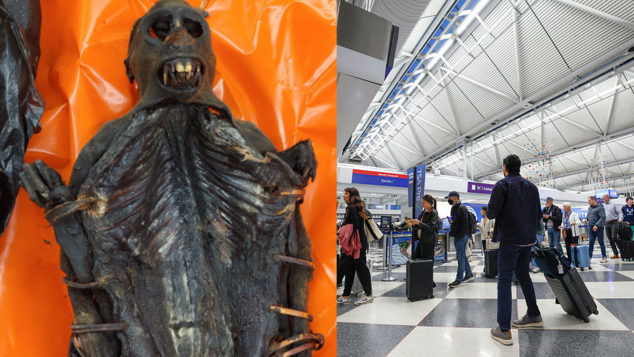
U.S. Customs and Border Protection (CBP) officers made a disturbing discovery at Chicago’s O’Hare International Airport, seizing a suitcase filled with prohibited agricultural items—including beans infested with pests, plants, and 4 pounds of monkey meat.
According to a CBP Chicago statement, the passenger had arrived from Congo and initially stated that the food in their luggage was “fine.” However, after specialists inspected the suitcase, they found a range of illegal and hazardous items.
“In the passenger’s suitcase O’Hare Agriculture Specialists found 11lbs of beans w/ pests, 17lbs of unknown plants, & 4lbs of nonhuman primate meat. These items are prohibited, seized, & destroyed,” the agency wrote in a post on X.
Disturbing Images Show Dried Monkey Carcass in Luggage
According to KTLA, officials shared one of the most alarming discoveries — an image of a dried monkey carcass, bound with fasteners and tucked among other food items in the passenger’s luggage.
CBP described the discovery as “nonhuman primate meat,” often referred to as bushmeat, which is considered a high-risk product for pathogen transmission. The photo quickly spread online, sparking public concern about how such materials could pass through global travel checkpoints.
The passenger’s identity has not been released, and it remains unclear if additional penalties or charges will be filed.
Officials Say Monkey Meat Is a Serious Health Risk
CBP officials said the meat was identified as nonhuman primate, which is strictly prohibited from being imported into the U.S. due to potential exposure to zoonotic diseases, including Ebola and monkeypox.
The Centers for Disease Control and Prevention (CDC) bans the importation of bushmeat and other wildlife products because of their ability to transmit deadly viruses between animals and humans.
The items were seized and destroyed following inspection. CBP noted that while travelers often bring food from their home countries, certain animal and plant products are banned to prevent pests and diseases from entering the U.S. food supply chain.