
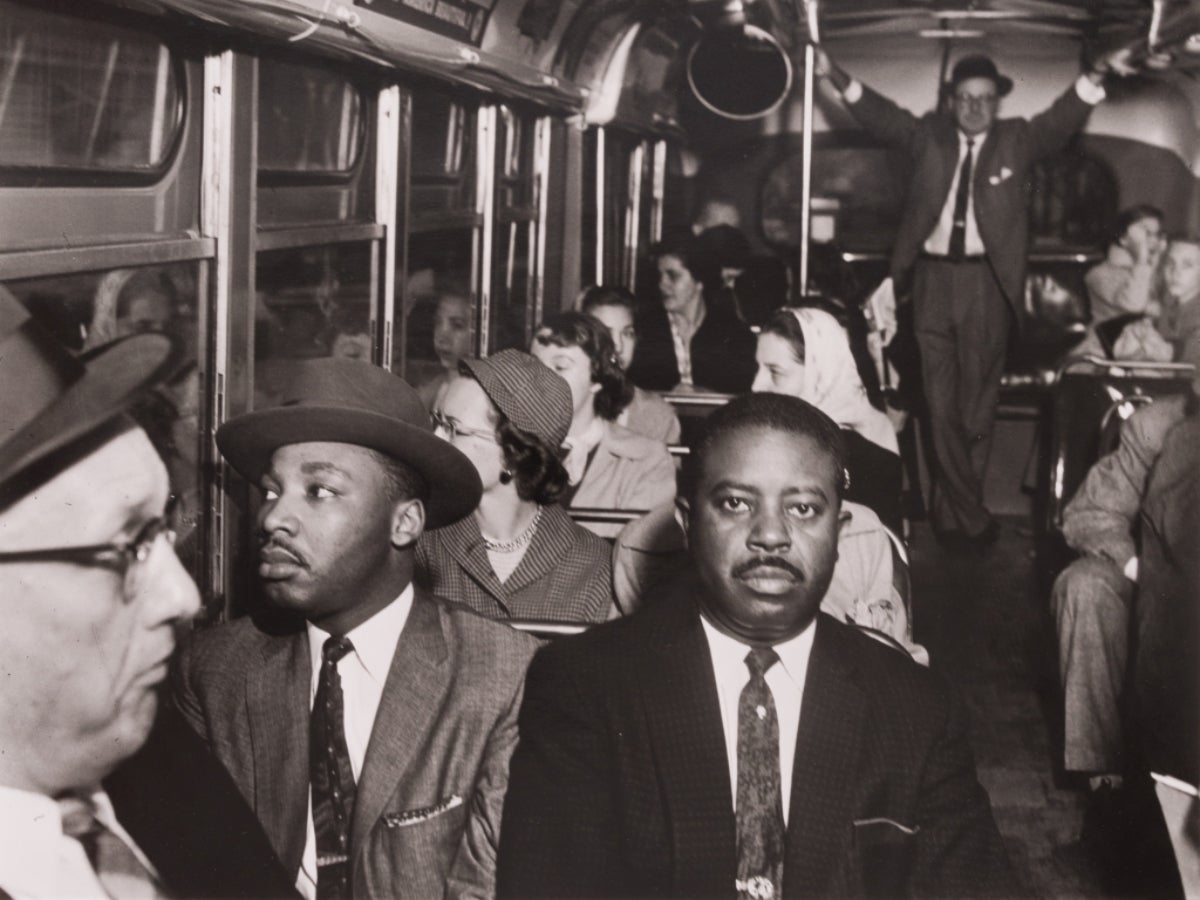
Housed inside Carnegie Museum of Art, Black Photojournalism brings together photographs that were originally published in Black newspapers and magazines. Made between the end of World War II and the mid-1980s, the images reflect the daily work of photojournalists documenting protests, political campaigns, church gatherings, social events, labor meetings, and family life. These photographs circulated widely at the time, reaching readers through publications that served Black communities when mainstream outlets often failed to do so. Seen together now, the exhibition presents a record of how Black photographers documented their own communities during periods of major social change.
A key component of the exhibition is the museum’s deep relationship to Charles “Teenie” Harris, the Pittsburgh-born photographer whose archive—more than 70,000 negatives—entered the museum’s care in 2001. Harris photographed relentlessly, often without captions, trusting that the images themselves carried meaning. That trust now requires community memory to complete the story. Charlene Foggie-Barnett, the museum’s Charles “Teenie” Harris community archivist, grew up around him. Her connection is personal, and deeply tied to the city’s Black history.
“Tennie was basically like an extra uncle to me,” Foggie-Barnett says. “He was always around. He’d stop by the house with negatives or prints for my father, and he always had his camera with him.” As a child, she learned quickly that Harris worked fast. “My job was to watch for his car and yell, ‘Teenie’s here!’ If people weren’t ready, they missed the moment. He had to keep moving.”
Harris’s busy schedule provides some insight into why so many of his images arrived at the museum unidentified. Foggie-Barnett became essential to filling in the gaps. When the archive was first opened to the public, she showed up carrying photographs from her own family’s walls—weddings, parties, everyday moments—many of them taken by Harris. “If we don’t come in here and tell our own stories,” she explains, “how are they going to know what they’re looking at? How would they know what a cotillion is, or why it mattered?”
Although substantial progress has been made as far as civil and human rights, there is still a long way to go if this country is to achieve true equality. Years ago, Black-owned newspapers and magazines like the Pittsburgh Courier, Chicago Defender, Afro American News, and Ebony built networks that allowed photographers of color to tell stories from inside their communities. These outlets reached national audiences, shaping how Black life was seen across the country long before social media made self-publishing possible.
“People will look at a photo and say, ‘I didn’t know Black people lived like this,’” Foggie-Barnett says. “It’s 2025. If we haven’t fully explained that yet, that’s part of why we keep sliding backward. These images prove what our lives actually looked like.”
Co-organizer Dan Leers, the museum’s curator of photography, sees the exhibition as a corrective to how photo history is usually taught. “As we started looking beyond Harris, we realized there was an entire ecosystem of Black photographers, publishers, and editors working at the same time,” he explains. “Especially after World War II, you had Black service members returning home asking why democracy didn’t apply to them. Black-owned media responded to that hunger for stories.”
Leers also points to the scale of these publications, which were far from small or regional. “The Pittsburgh Courier had hundreds of thousands of subscribers nationally,” he states. “These papers were syndicated. Their reach was national, even international. That’s often left out of the story.”
The exhibition design, led by artist David Hartt, reinforces the sense of movement. Images don’t feel frozen in time; they feel like part of a living exchange. One photograph leads to another, building rhythm and conversation. A funeral portrait by Moneta Sleet Jr. gains weight when you understand his relationship to the King family. “He knew them,” Leers notes. “That closeness shaped how he photographed Coretta Scott King. That intimacy is visible in the image.”
What makes Black Photojournalism resonate is its refusal to sugarcoat the Black—and American—experience. The exhibition speaks to all facets of what it meant to be alive post-WW II. It portrays celebration and struggle, often in the same frame. “These photographers told the big stories, yes,” Foggie-Barnett says. “But they also told the in-between. The everyday things that traditional media never thought were important.”
Walking through the galleries of Pittsburgh’s heralded museum, it becomes clear that these pictures were tools used to inform, to organize, to affirm, and sometimes to simply say, we were here.
“It’s the appreciation,” says Foggie-Barnett. “Especially at this time in what’s going on in this country, it’s a joy, but it’s also a responsibility that we must nail this down into the thinking of people and to reemphasize it in those that know and introduce and explain to those who don’t.”