
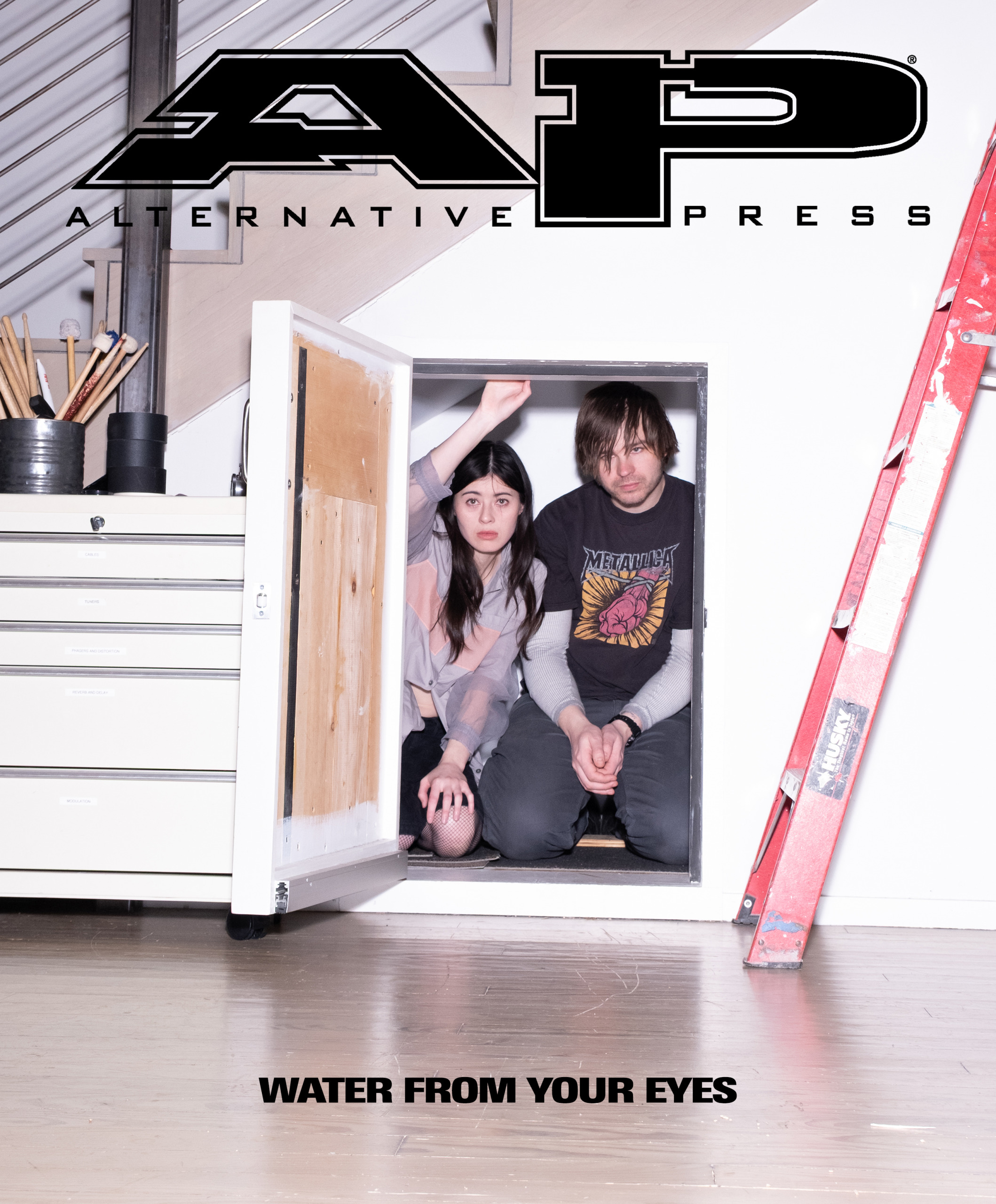
“Our band is old enough to do the multiplication table,” Rachel Brown laughs. “Or take piano lessons,” Nate Amos throws back. For 10 years, the two artists have been making music together, under the moniker Water From Your Eyes, a project that’s taken them from Chicago to New York, where they’ve become a necessary artery in the city’s noteworthy indie scene. Over the course of four albums and three EPs, they’ve proven themselves the enigmatic deep-sea explorers of alt-pop, wearing their music like a loose garment, inspired by fluid and curious artists like Ween and Red Hot Chili Peppers — the almost-accidental sonic provocateurs who, relying on their own far-reaching philosophical ideas and unruly instincts, created eclectic sonic worlds, which though previously uncharted, are now canonized.
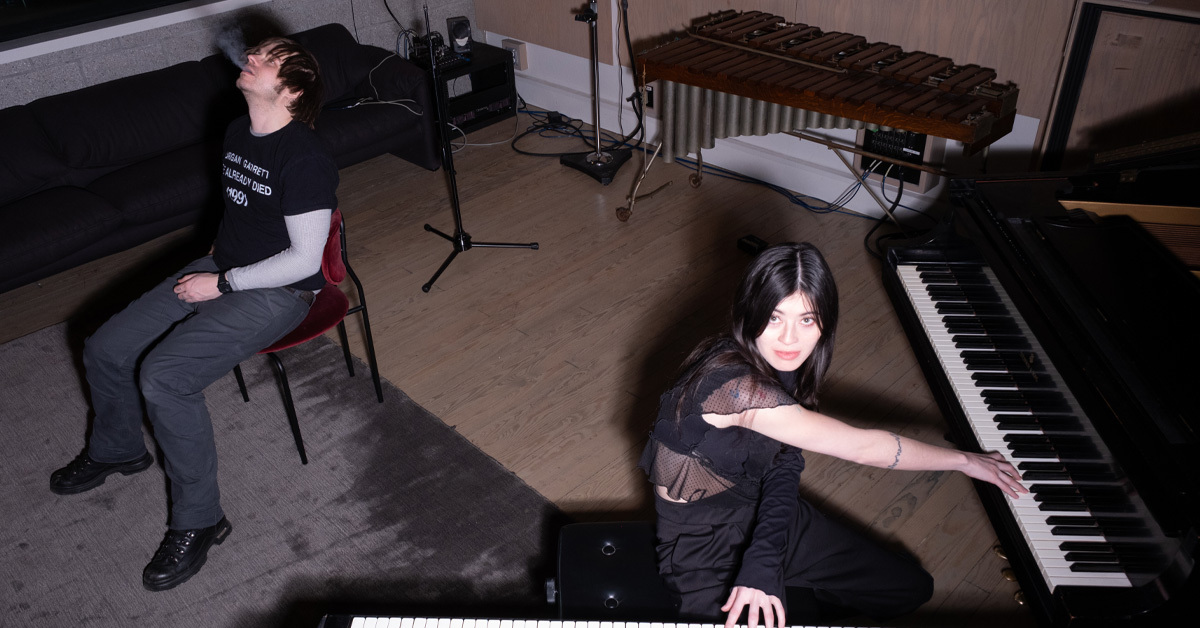
Water From Your Eyes, too, offer a sound and perspective as expansive as it is unpredictable and unique, where reflective lyrics and instrumentation question life’s meaning, purpose, and mortality to the tune of references ranging from Talking Heads to nü metal, classical bluegrass to Charli XCX. As is their signature, these ideological depths and divergent genre directions are delivered by the duo with profoundly deadpan, satire-steeped, intimidatingly nonchalance — in song, onstage, and in candid conversation. However, tough as their demeanor presents, theirs is a body built like a newborn skull, where two small, soft fontanelles hide in plain sight. Only a layer of skin is protecting the outside world from Water From Your Eyes’ tender, raw insides. These dialectics are one of the many beauties of this band. In a thrilling ocean of experimentation and the unknown, they give us moments to brush against a vulnerable soft spot, and hear the tactile pulse of wavering, human emotion.
Adam Powell
Read more: Tea with Hayley Williams: AP Artist of the Year
“The band, thematically, is built around having an existential crisis,” Brown says, bluntly. “It used to be that the existential crisis was from the point of dinosaurs or other various, sad animals. We definitely have a song about climate change from a polar bear’s point of view… ” They’re taking me back to the nascent years of Water From Your Eyes, when the duo were still a couple, living in Chicago. “The first song on our first EP, Water From Your Eyes, was ‘You Just Drive By,’ about the pigeon I hit with my car.” The track tells the tragic, true story of Brown’s avian accident — to a jagged, wandering synth-pop tune. It is a product of their earliest era, when the “sad dance music” of New Order was the group’s guiding light — informing everything down to their band name. “Tears was too obvious,” they tell me.
True to form for what Brown and Amos’ project would become, the pigeon’s tale twists a mundane moment into something with real meat on its bones, both catchy and, of course, complete with an unsettling sense of looming darkness. Also true to form, Brown is still questioning, “Well, I hit the pigeon with my car, but the pigeon also kind of flew into my car…“I say that it hasn’t happened since because I don’t think I’ve ever hit a… but sometimes a bird flies really close down the highway, and you’re like, ‘Well, I’m just going to assume that I didn’t hear anything…’ I don’t think it died, but I don’t know because I left. Just kept driving.”
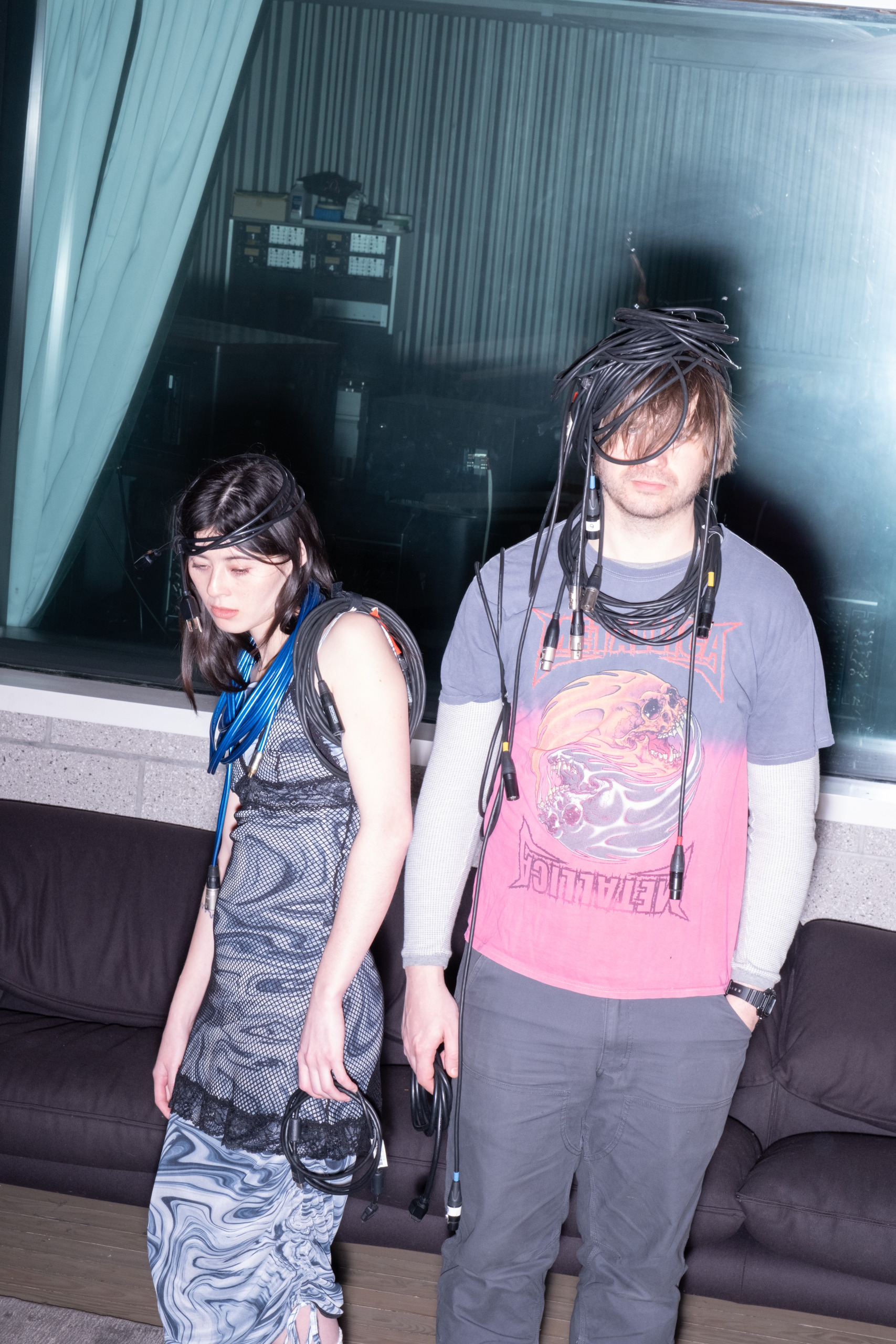
Adam Powell
The animals were a tool for the band in early days, a vehicle for feelings they couldn’t yet articulate from the first person. Brown recalls one of the earliest songs they wrote in the band, a track introducing Jazz Kennedy, “a dog in a dog world whose dad dies.” What could be read and written off as humor, or quirkiness for the sake of being quirky, doesn’t fit the bill for Water From Your Eyes — they have long been trudging their own path, often as uncertain as the listener as to where the next fork will take them. “I don’t even know why, but we were always trying to come up with these increasingly elaborate scenarios that ultimately would provide direction for a song… But not really. It’s not like anyone could listen to that first EP and figure out what’s going on or understand the direction. It was more just about finding some theoretical scenario and then choosing an emotion from within it,” Amos muses. Often, they finish each other’s thoughts. Brown picks it up: “Emotion is something obviously we both have experience with, but it felt so much easier at the time to create these characters, and put them in situations specific to their species.”
Before you go listen to the band’s latest album, attempting to interpret each song as a specific flavor of roadkill, Water From Your Eyes didn’t stick around the animal kingdom in their search to understand life and death. A few years in, the writing process moved into pop culture, movies, and their side characters. There was a track about Thanos of The Avengers, who, armed with a magic glove, saves the world — only by eradicating half of it. Eerie and apocalyptic, bizarre yet astute, here was another catalyst ready to provide creative and emotional propulsion. However, around the time they were dipping their toes into the Marvel universe, things began to unravel between two very real humans, in real time. Namely, the band members, as they urgently attempted to finish what would be their third full-length, Somebody Else’s Songs.
Adam Powell
“The rest of those songs… actually, I don’t actually know what they’re about,” says Brown. “We were getting ready to break up. It’s funny: The actual song ‘Somebody Else’s Song,’ in particular, I literally had no part in it.” Amos sighs. The album’s title track had been composed of two songs he’d written for his solo project, This is Lorelei. He nods, “That album was a slog to make. We were working really, really quickly, and we just hit this point where, I guess, we weren’t really enjoying it as much as we had been.” At one point, they tried to construct another conceptual vessel, hoping to emerge reinvigorated — a last-ditch effort, in the form of a project narrated from the point of view of Hotch from Criminal Minds, and Trip from Star Trek: Enterprise. It was aptly titled Hotch’s Trip, but the trip never happened. Instead, the couple called it.
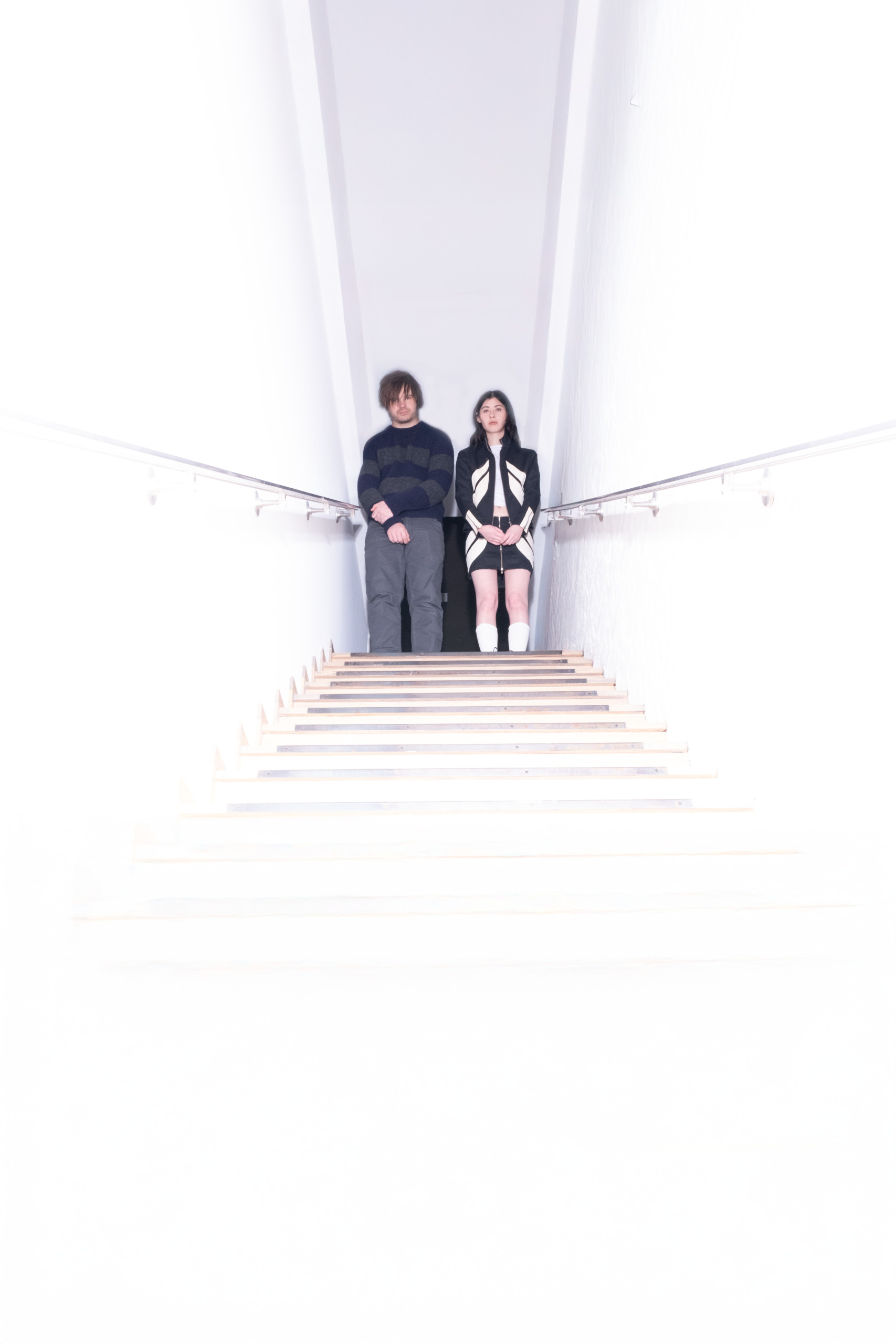
But rather than burn down with the relationship, Water From Your Eyes grew from the charred ground where it had stood. Amos adds, “I think when it’s the right decision, it can be easy and hard.” Outliers in so many ways, the duo — who still had time left on their shared lease — even describe their breakup to me as “easy.” Brown explains, “That album was like the process of us getting to the point of being like, ‘Maybe this isn’t working.’ The band had stopped functioning because our relationship had stopped functioning. So we broke up, and then worked on our next album, Structure, and that was the first album that actually didn’t have either animals or characters involved.”
Adam Powell
Having hit their bottom as a couple, with the worst theoretically behind them, allowed Amos and Brown to grow closer, as collaborators and friends. Their issues no longer related to or “revolved around each other.” They could be more open, honest, and their communication improved. The space was safer, and it manifested in the subject matter brought to the table. “Well, there was always some element early on of the band being a little bit of a bit,” says Amos. “At the very beginning, there was the animal thing, but also, the first EP is essentially just this straight-up New Order pastiche, and that was the whole vibe. After the breakup was when we found more of a musical direction.”
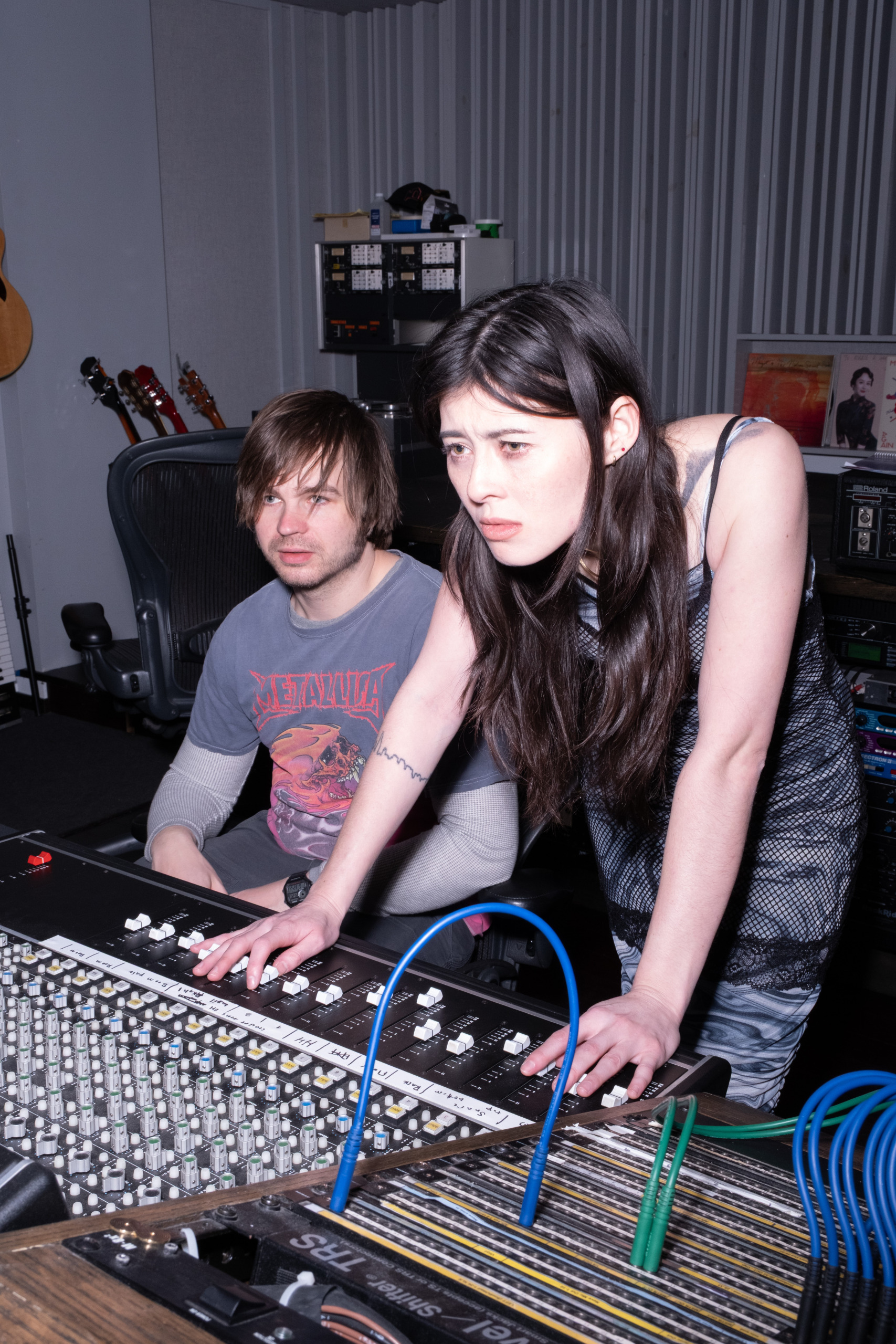
But in a post-“bit” world, where the artist’s own sincerity sat in for animals and superheroes, we weren’t going to get a diaristic, saccharine breakup album. A reflection of the chaos it emerged from, 2021’s Structure is the sum of two parts, a choppy, abstracted ode to duality that’s laid out like an impossible indie-pop Rubik’s Cube, with squares colored by ’70s-tinged “falling out of love” songs, eerie spoken word, dark industrial beats, and catchy dance-punk. It was also the first album, the band claimed upon its release, that they were entirely happy with. “It was at that time that it felt like we had stumbled upon what the project actually was,” Brown tells me. “All the other things had just been throwing things at the wall.” Amos swoops in, “I liked the things on the wall! It was fun! But yes, it wasn’t necessarily WFYE yet.” From the first person, a new, more personal creative identity was forming. And like most things, especially when it comes to this band, the process is not linear.
Adam Powell
Following the moment of clarity Structure provided, Water From Your Eyes took another turn. Their next full-length arrived in the strange, dark shape of the fatalist Everyone’s Crushed. Though perhaps their most experimental, it was also one of their most successful. Against Amos’ exotic stew of genre influence and unlikely instrumentation, the album sees Brown delivering a melancholic eulogy, spun through with bone-dry satire — reading off violent, uneasy personal anecdotes and dark truths on societal downfall like items on a grocery list. Between the two, unified like never before, they solidified on this project that if we can count on anything from Water From Your Eyes, it is that not only will their musical ambitions continue to mount, but they can be trusted fully to make even the furthest-fetched ideas work. And we’ll never know what’s coming.
One year ago, I was sitting backstage in a greenroom, talking to post-hardcore supergroup L.S. Dunes about their sophomore album, Violet. Vocalist Anthony Green mentioned something I haven’t forgotten since. He described how he’d used their first album as therapy — and though he’s no stranger to using pain for creative good — with the Dunes album, it was almost to his own detriment. It allowed him to set a new intention: “I saw the second record as an opportunity to counteract some of the damage I did to my own brain. Just singing some of those songs for an entire two-year cycle… I thought, ‘How do we make something where it’s not going to feel like I need to go to therapy at the end of the show?’”
Adam Powell
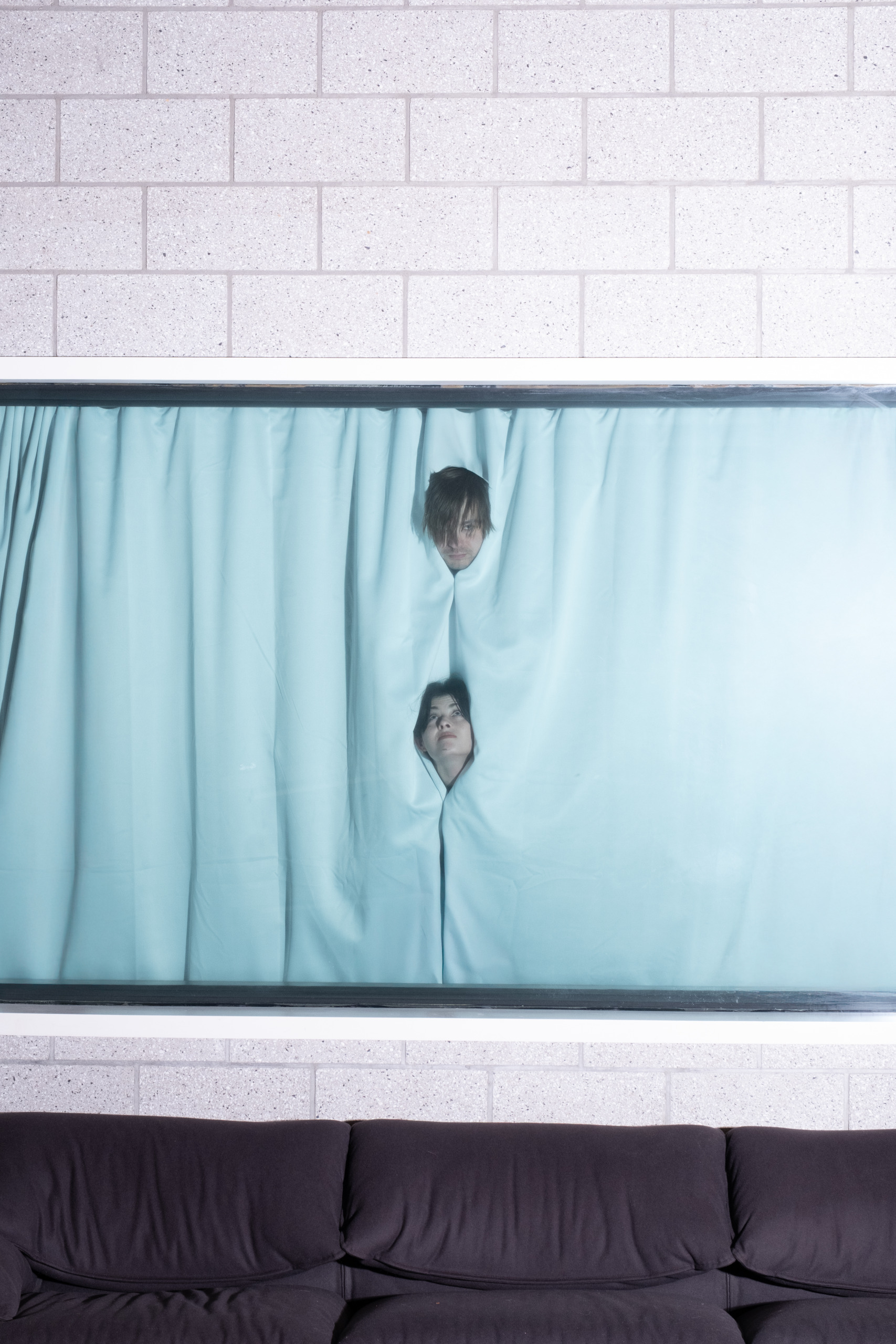
In that same vein, Brown and Amos went into their next project, last year’s It’s A Beautiful Place, seeking new direction with slight desperation. Regardless of the thick layers of black humor they’d used as a salve, after Everyone’s Crushed, something had to give. They needed sunlight. “It’s like spending an entire album cycle just defeated and dwelling in pessimism… And I think we were,” says Amos. Brown bolsters the point, “Everyone’s Crushed felt very self-involved. The pessimism and pain that we were both experiencing, while obviously it wasn’t an awesome time in the world, it was very focused inward. The next album felt like us reminding ourselves that we’re part of something so much bigger, but that our own efforts, even how insignificant they are at a physical level, at an emotional and spiritual level, are just as important as planets moving around.”
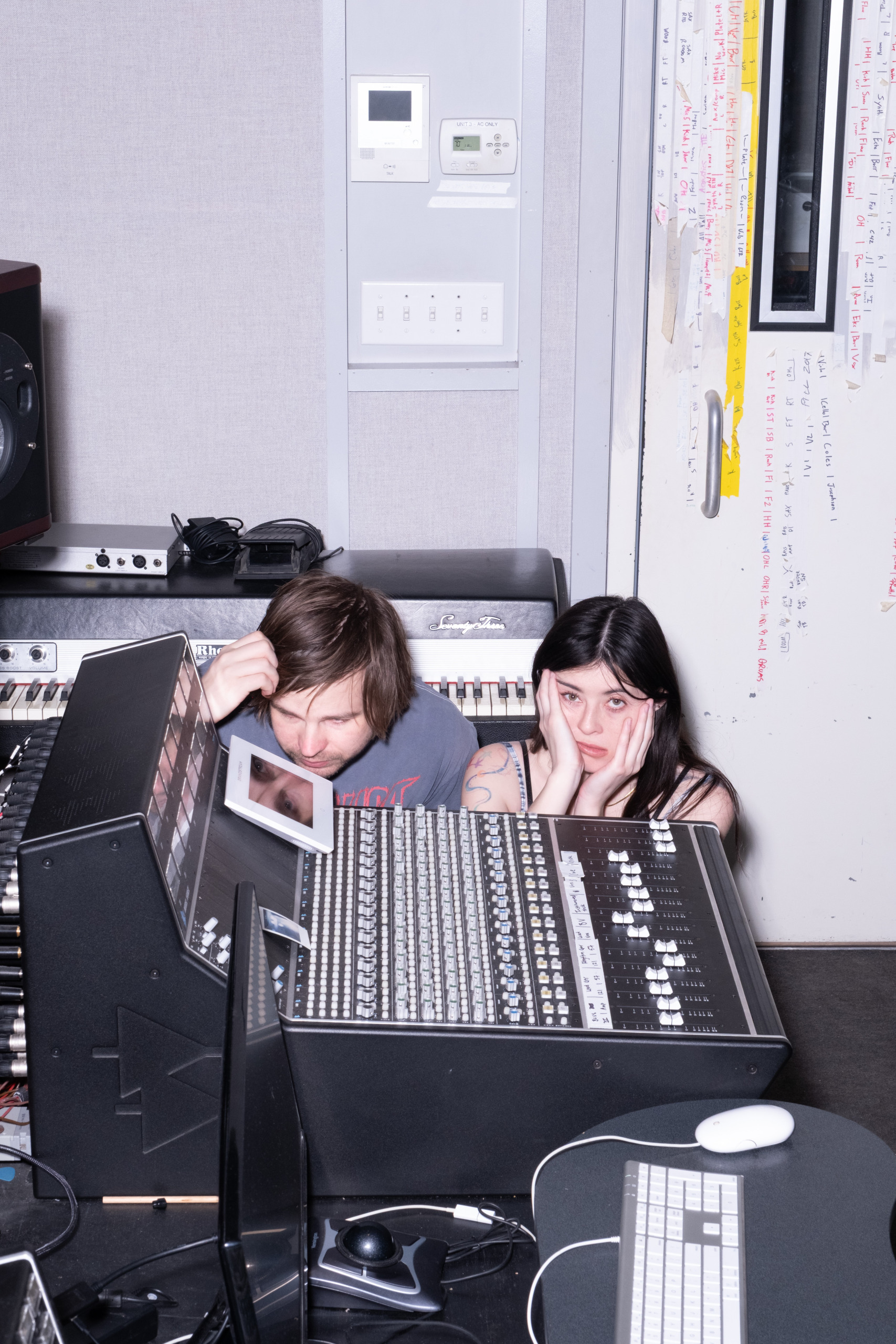
Brown continues to ground us firmly on Earth. “Obviously, It’s a Beautiful Place isn’t the happiest album in the world. But to me, it’s about fighting to hold on to optimism and hold on to hope and faith that the world can be better, that there’s a future that all of the cruelty that we’re constantly witnessing every single day-and-a-half for years, that there is a point in which the people of the world can find ways to change within their lives and in their communities to make life more bearable. That’s the bare minimum. We live in New York. We’re both surviving in ways that I’d say my life is pretty easy compared to others. I have no place to be hopeless if the people of Gaza have hope. If people in Sudan have hope that these genocides will end, I can have hope that I can literally do anything to help make that happen.”
Adam Powell
Gone are the days where Jazz Kennedy the dog had to be the door to a real, and painful, conversation. “It’s important to us, as artists suddenly having this platform,” says Brown, “to see significance in people listening to us speak. Even though I’m stupid or shit, it doesn’t mean that we can’t offer something.” Amos adds, affirmatively, “Just because we’re stupid doesn’t mean our music has to be.” And though it might not seem so, that’s a powerful line, especially in the context of this complicated band. Looking back over 10 years, perhaps it’s too easy to just say that change has been a constant for this band. Maybe there are just more and more dialectics to discover. Piles of opposing ideas, on their way to fully synthesizing, as they move through the stages of thesis to antithesis. Many things can be true. Humor and stark, serious earnestness. A weighted political message and the rambling story of an anonymous pigeon who may, or may not, be dead.
But from who, or whatever, within the Water From Your Eyes-verse their sentiment was coming from at any given time, an impact has already been made, and much given back by the band. It’s hard to read the label when you’re in the jar. Rattling off artists within their community, it is made all the more evident that they are an irreplaceable thread in the fabric of indie music’s renaissance. fantasy of a broken heart, Dirt Buyer, Sweet Baby Jesus, Model/Actriz, Geese — they’ve all been tourmates, collaborators, and friends in some capacity over the years. Cementing this fact, Brown goes into a story about nearly “killing” Cameron Winter, after falling asleep at the wheel on both bands’ very first tour. Amos jumps in, “To be fair, you were driving him to the emergency room because he lost his beautiful voice. You almost killed him, but you also saved him.”

Adam Powell
Their next tour won’t look much like that one, hopefully. At last year’s Newport Folk Fest, Brown — who was there, doing interviews for Stereogum — got a strange request. Though she wasn’t on the lineup, apparently Hayley Williams wanted an interview. “We really hit it off. I guess she’s a fan!” they say, shyly, though it’s a fact I’ve long since known. The last few times I spoke with Williams, she’s made sure to bring up and emphasize her favorite band: Water From Your Eyes. And from that moment in Rhode Island, things unfolded in ways that surprised even Brown and Amos — they were offered the opening slot on Williams’ highly anticipated solo tour. And what’s more, just earlier this week, there was more mutual fandom on display, when Williams’ own duo project Power Snatch covered This is Lorelei on the latest deluxe.
When I ask what’s next, knowing all too well there wouldn’t be a straight answer. “When Nate stops touring, I think there are a couple ideas we’ll finally be able to accomplish,” Brown says. “One is just a full-length Red Hot Chili Peppers covers album.” What sounds like misdirection for my nosy journalist questioning, with Water From Your Eyes, is more likely an actual pin on the map. Amos throws out another stop, “Oh yeah! I also like the one where we only do really long songs. All ‘Free Bird’ and ‘Stairway to Heaven’ shit like that. Just awesome classic rock, but every song has to be longer than four-and-a-half minutes.” Pivoting proggier, for someone like Amos whose guitar work has only gotten more involved over time, makes perfect sense. But these two making “classic rock”? Maybe not in the cards. If and when their iteration of “Bohemian Rhapsody” arrives, we can guarantee that everyone’s least favorite karaoke song will have undergone a full-blown blood transfusion. Nothing with these two will remain as it seems.
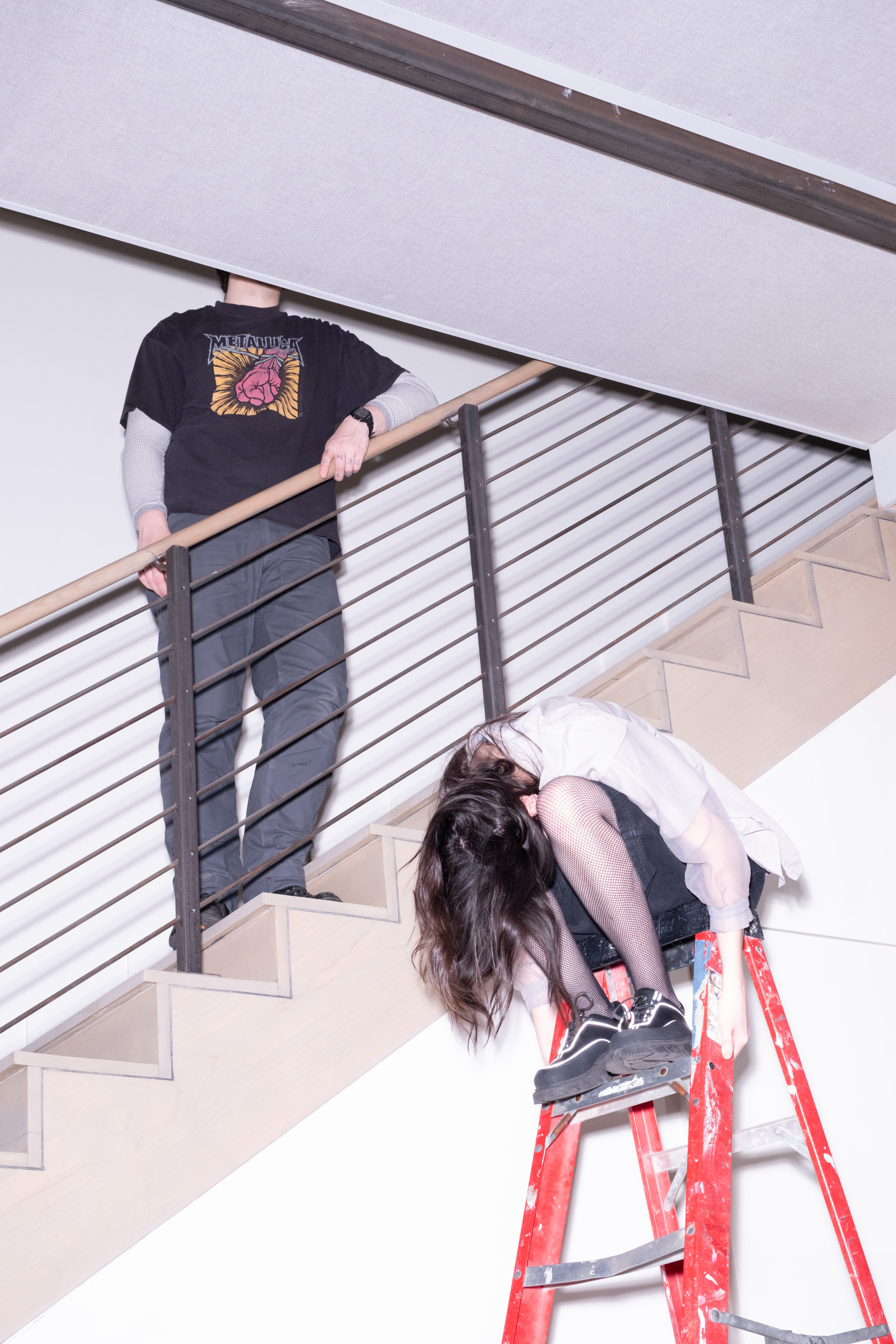
Adam Powell
Photography: Adam PowellStory / Editor in Chief: Anna ZanesContent Editor: Neville HardmanLead Designer: Rob OrtenziPhoto Assistant: Brian Karlsson