

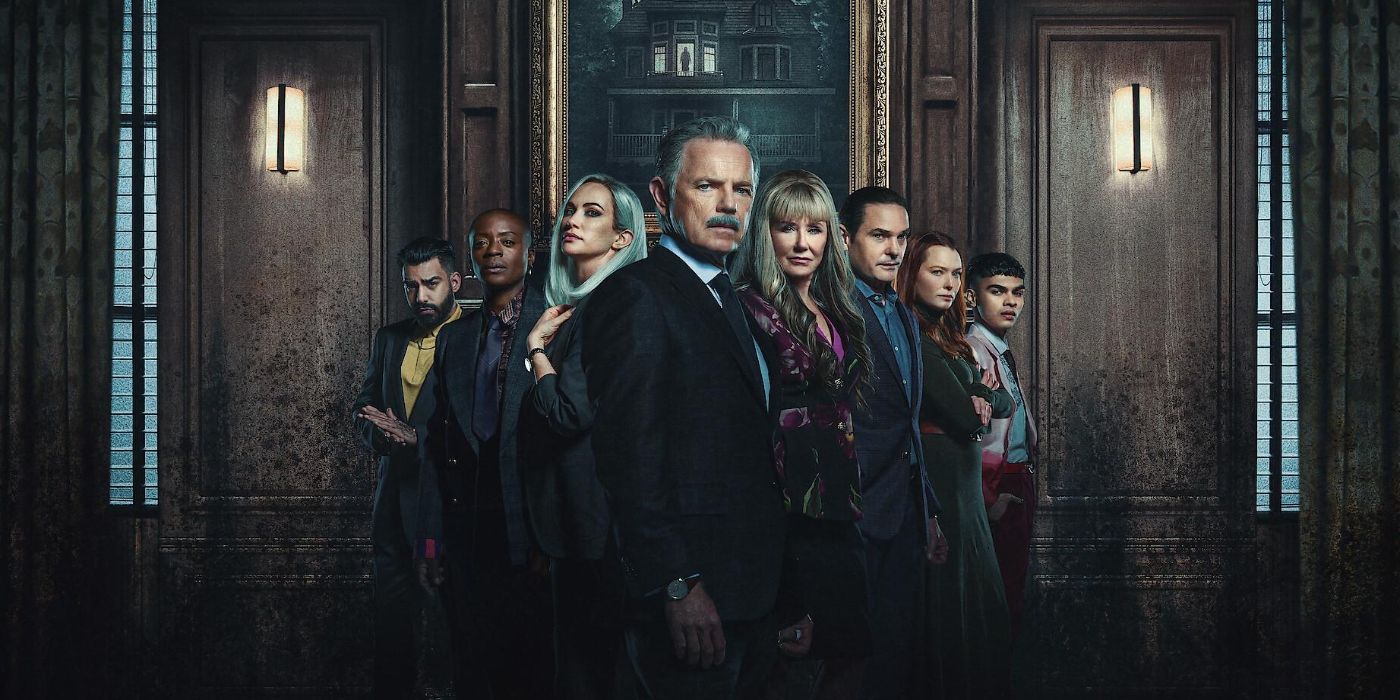
Among Mike Flanagan’s many collaborations with Netflix are horror miniseries adapted from work by Shirley Jackson (The Haunting of Hill House) and Henry James (The Haunting of Bly Manor). These were classic works from the literary canon, reimagined for the modern world. It makes sense that Flanagan’s next Netflix collaboration would be to adapt work from Edgar Allan Poe, a heavy influence on both James and Jackson, often credited as the creator of the gothic horror genre. The Fall of the House of Usher shares its name with a short story by Poe (which you can read here). In that story, a nameless narrator is summoned to the estate of his old friend, Roderick Usher. The house is occupied by Roderick and his twin sister, Madeline, both of whom are living in a state of advanced mental and spiritual decay. The house itself, the narrator suspects, has somehow absorbed their sickness. But Usher isn’t the only Poe story to be adapted in the new Netflix series. In fact, each episode pays homage to a different story.
‘The Fall of the House of Usher’ Is Netflix’s Spooky ‘Succession’
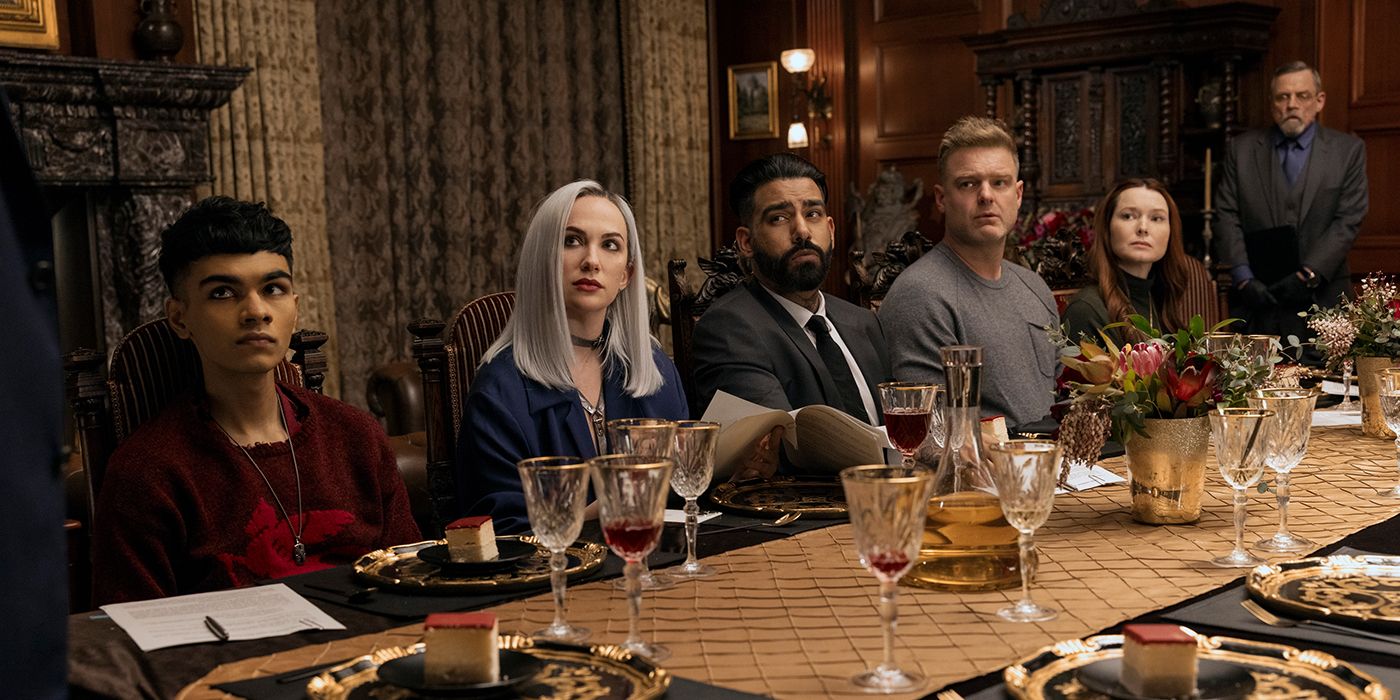
Mike Flanagan’s Ushers are a large, bickering family of heirs to a pharmaceutical dynasty. These newly invented characters are drawn from the rest of Poe’s macabre collection of fiction and verse. The Ushers built their fortune by starting up the ruthless Fortunado pharmaceutical corporation. Somebody, or some entity, is stalking them, one by one, and taking their revenge. This is a very loose adaptation of the namesake story. The literary Ushers are a wealthy family, but Roderick has no children. The entire Usher family, going back generations, is known for producing only one heir with each generation, and so never spreading out of their one estate, even as it becomes decrepit.
It appears that the series will fit the two ideas together by setting the story in the present, when Roderick (Bruce Greenwood) is alone with most of the series narrated as flashbacks. Also, while the Usher family in the story is a malignant cabal hoarding a pile of ill-gotten gain, the Ushers in the story are just an eccentric old-money family, known for being frequent patrons of the arts. One of the narrator’s series of miserable experiences while visiting Roderick involves having to look at a very unsettling painting his friend made. Hopefully, the art-loving aspect of Roderick’s character, terrible taste and all, is maintained.
The Raven
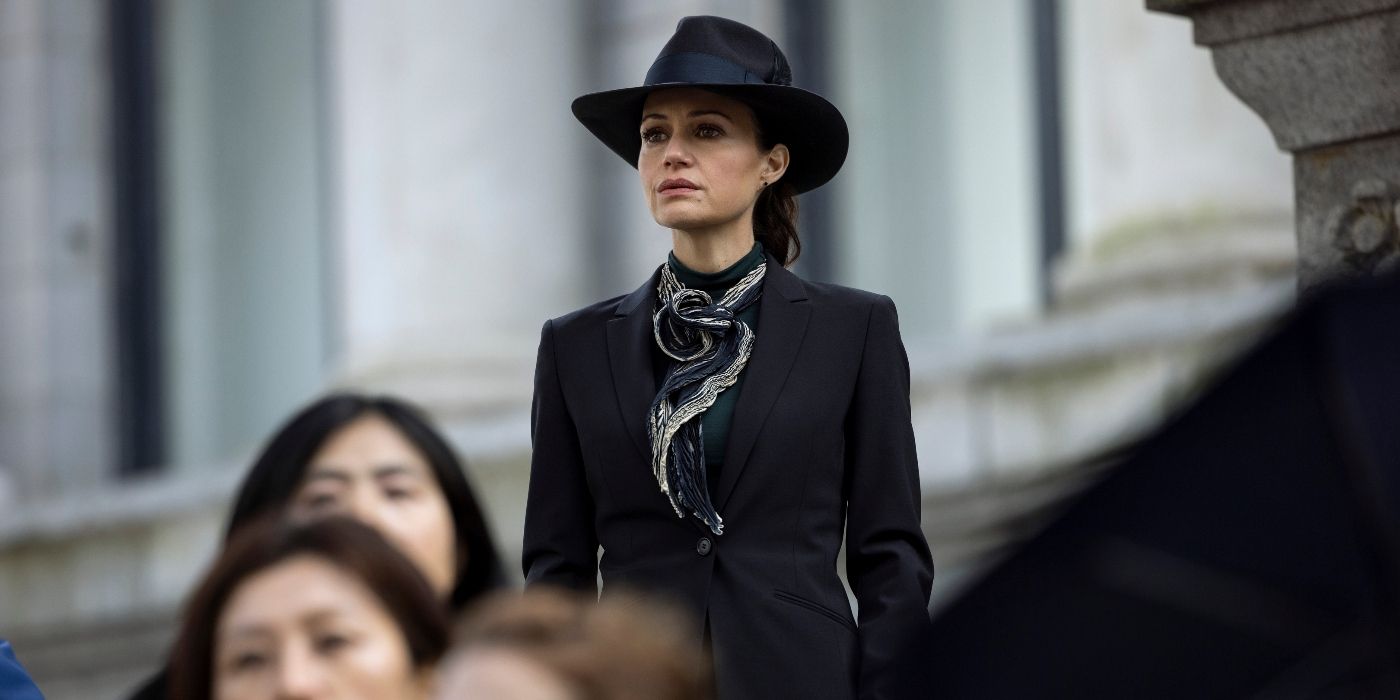
Is “The Raven,” the most famous poem in the world? If not, it’s at least Poe’s best-known work. In the poem, our narrator is up late on a cold winter evening. He cannot sleep because he’s grief-stricken following his love, Lenore, “the rare and radiant maiden whom the angels named Lenore.” A raven flies into his window, and he can’t get it to leave. The raven can speak, but only one word, “nevermore,” which is generally interpreted as a symbol that the narrator will never overcome his grief.
Mike Flanagan has released the names of all eight episode titles, and Episode 1’s “A Midnight Dreary,” and Episode 8’s “The Raven” are both references to this poem. In the Netflix series, a raven seems to haunt Roderick Usher. Additionally, the character played by Carla Gugino – a supernatural entity that seems to be bent on taking her revenge on the entire Usher clan for motivations we will likely discover – is named Verna, an anagram for our favorite corvid. Verna and the raven may be alternate forms of the same creature. Finally, Roderick’s granddaughter (Kyliegh Curran), the only innocent family member of the Usher family, is named Lenore. This doesn’t bode particularly well for her character, but we’ll see how things go.
The Masque of the Red Death
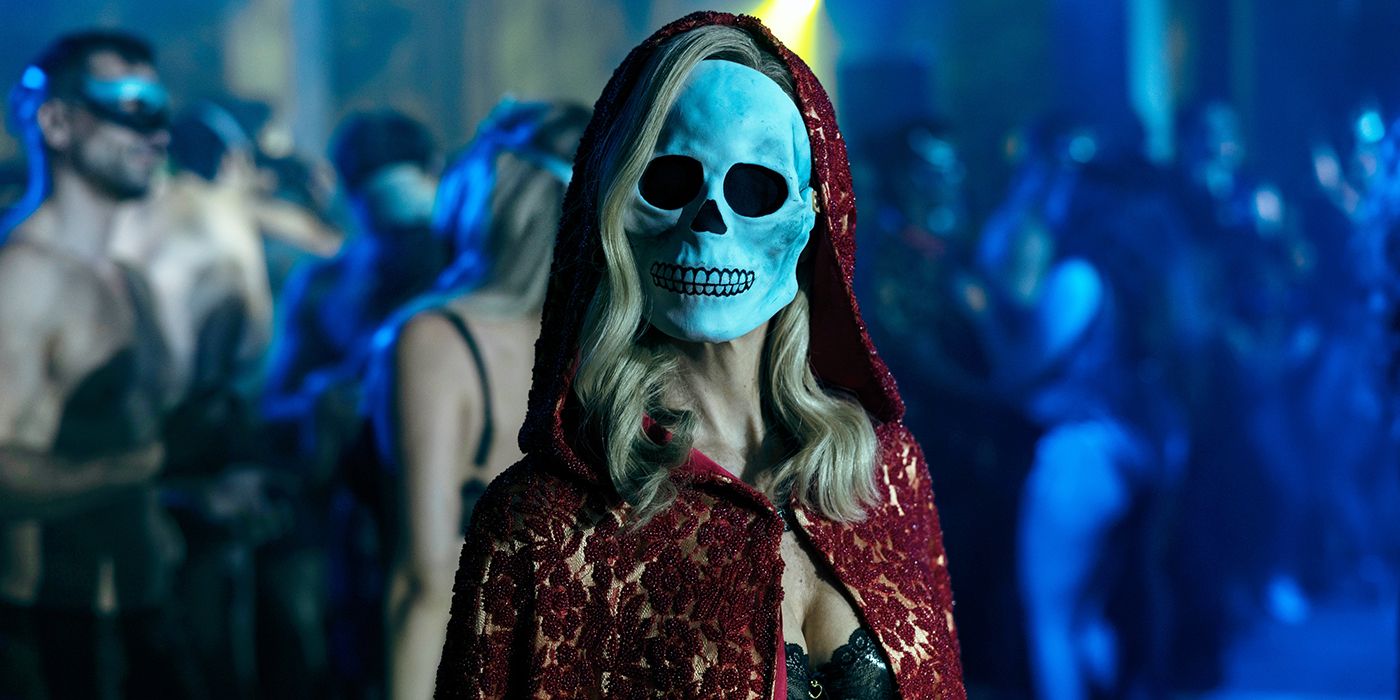
“The Masque of the Red Death” is a revenge story, and based on the same class divide as the series promises to be. In this tale from Poe, during a time of plague known as the Red Death, the upper class of a medieval city seals themselves in the palace of Prince Prospero. Thinking themselves safe from infection, they throw themselves a gaudy masquerade ball. But a mysterious guest, wearing a skeletal mask, invades, and horror ensues. The trailer seems to borrow heavily from the imagery in this story: masks and disease. There all seems to have been a combination of characters, as Verna is also the mysterious masked figure who brings death with them.
Episode 3 is titled “The Masque of the Red Death,” and one of Roderick’s many children is Prospero (Sauriyan Sapkota), which is the name of the prince who throws the masquerade ball. In The Haunting of Bly Manor, Flanagan titled an episode “The Romance of Certain Old Clothes,” which is the name of one of Henry James’ short stories, and then adapted the plot of that story into somewhat of a stand-alone episode. It seems likely he has done that here as well.
The Narrative of Arthur Gordon Pym of Nantucket
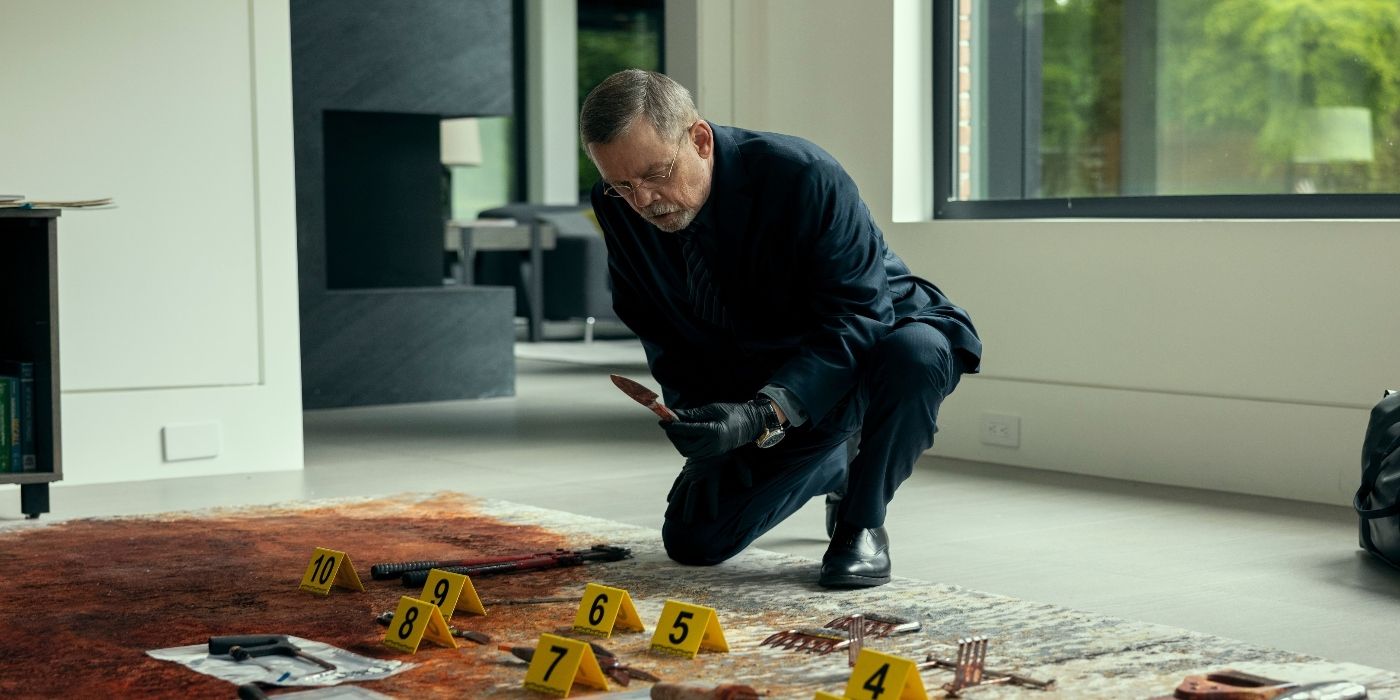
Mark Hamill plays Arthur Pym, the Usher family lawyer, also known as “the Pym Reaper.” Pym features heavily in the trailer; he appears to be the family’s hyper-competent fixer, handling much of their dirty work. The name comes from The Narrative of Arthur Gordon Pym of Nantucket, Poe’s only novel. The novel, which Poe wrote because his horror stories weren’t selling, was intended as a departure. It’s a serialized story about a young man who seeks adventure on the high sea. There’s no obvious connection between the novel and the character Hamill played. However, given the book’s abrupt ending, which pivots back into horror, a connection between the old and young versions of the character could be imagined.
Annabelle Lee

Most of the story will be told in flashbacks, narrated by Roderick to Dupin (Carl Lumbly). In the distant past, we’ll meet Roderick Usher’s first wife, and the love of his life, named Annabelle Lee (Katie Parker). Anabelle Lee is also the name of Poe’s poem about a childhood love who passed away. The poem is generally considered to be inspired by Poe’s own wife, Virginia Eliza Clemm – who was also his cousin. Poe, whose biography is quite unsavory, married Clemm when she was 13 years old, and she died after a long illness when she was 25.
‘The Fall of the House of Usher’ Is Full of Edgar Allan Poe Easter Eggs

At a glance, there are countless more allusions to Poe that might be of tremendous importance to the story, or could be no more than homage. Carl Lumbly’s Dupin is an attorney attempting to see the Ushers brought to justice in the courts. His character’s full name is C. Auguste Dupin, the name of a detective who features in three detective stories by Poe, including “Murders on the Rue Morgue,” which shares its name with Episode 3 of the series. Dupin, a predecessor of Sherlock Holmes, is considered to be the first detective in literature. Poe is credited as having essentially invented this genre as well, which he called his “tales of ratiocination” because the term “detective story” didn’t exist yet. Here, the character of Dupin has been combined with the narrator’s character in “The Fall of the House of Usher.”
Most of the character names were clearly drawn from Poe texts, but there’s often no obvious connection to the stories that the names were borrowed from. Each of the names of Roderick’s children comes from Poe’s minor works. Frederick (Henry Thomas) is a German man who inherits his family fortune and then becomes tragically obsessed with a horse in the story “Metzengerstein.” Tamerlane (Samantha Sloyan) was a historical conqueror Poe wrote a poem about. Napoleon (Rahul Kohli) is a vain man who refuses to get glasses in “The Spectacles.” Camille (Kate Siegel) is a victim of a murderous orangutan in “The Murders in the Rue Morgue.” Victorine (T’Nia Miller) is buried alive in “The Premature Burial.” William Wilson (Matt Biedel), Tamerlane’s husband, is haunted by his doppelgänger in “William Wilson.”
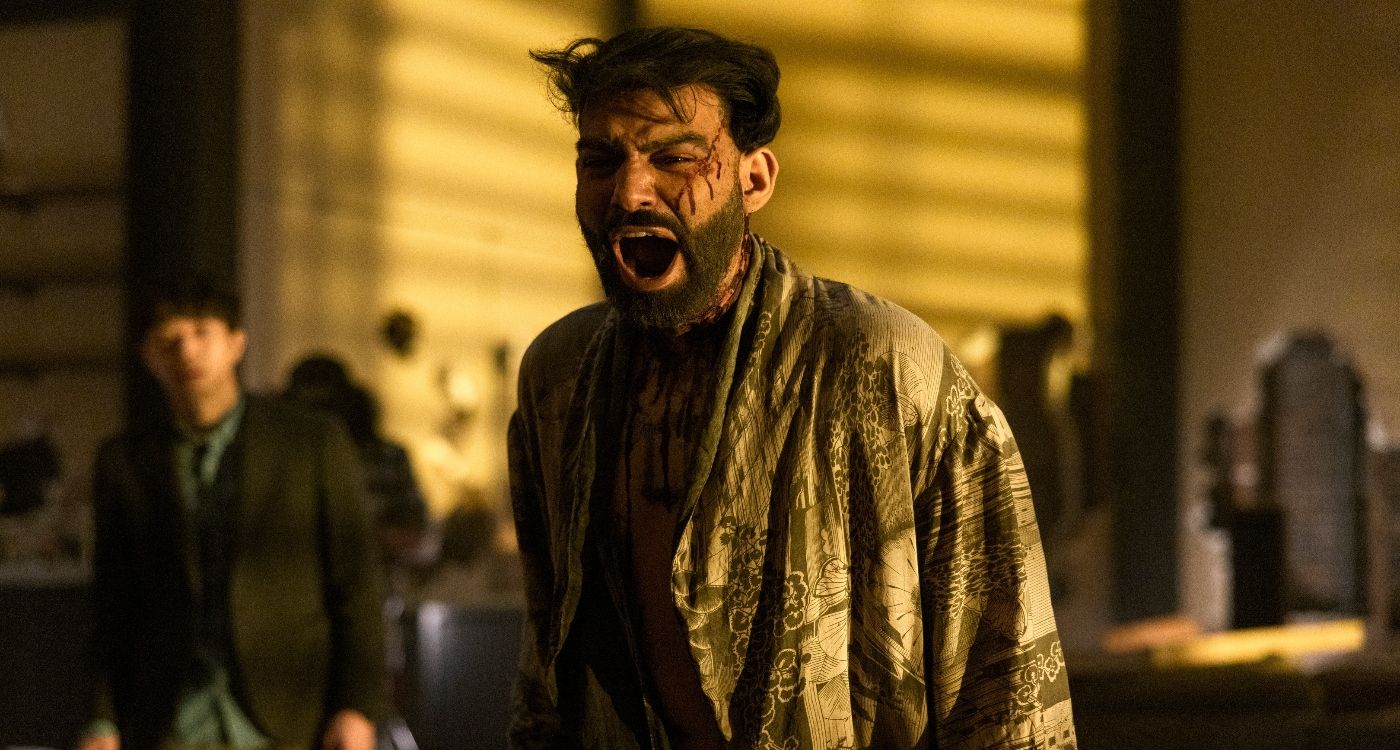
Finally, there are loose episode titles that share their name with stories that don’t seem to connect to the character names we know. “The Pit and the Pendulum” is about a man who wakes up strapped down to a table, with a swooping pendulum slowly lowering to the point that it will cut him in half (the pendulum appears in the trailer). “The Black Cat” and “The Tell-tale Heart” are both narrated by murderers. “The Goldbug” is about a wealthy adventurer who seeks a legendary treasure that may not exist. There’s a character played by Michael Trucco named Rufus Wilmot Griswold. He is, with Roderick, an original founder of the Fortunado company. (By the way, Fortunado is the name of an unfortunate character in “The Cask of Amantillado.”) This is also the name of a critic and contemporary of Poe’s. Griswold and Poe shared a lifelong rivalry, and Griswold is famous for trashing Poe in his memoir. So maybe we’ll get meta and Poe himself will turn up.