

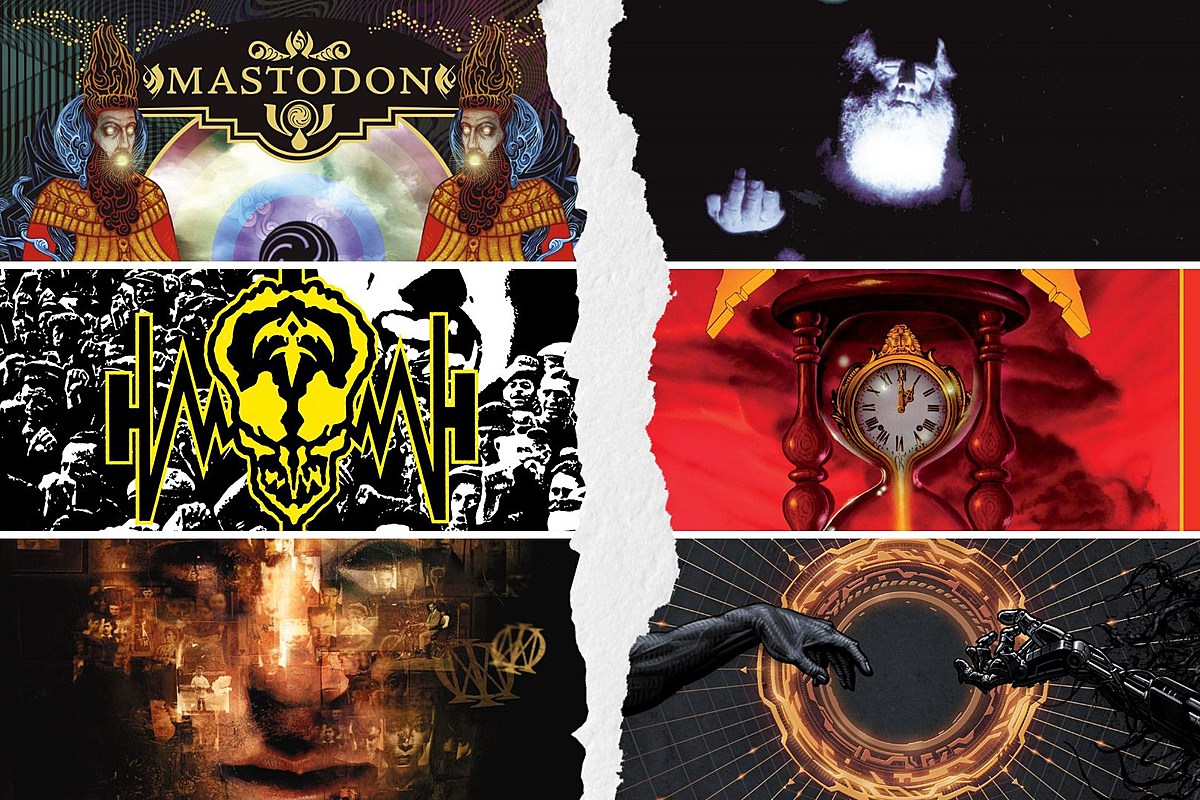
What’s the difference between technical and progressive styles of metal?
As metal fans, we love to debate the similarities, differences and qualifications of our favorite subgenres. While it’s generally easy to distinguish between, say, doom metal, folk metal, industrial metal and nu-metal, it’s harder to separate styles that – at least on the surface – have a lot in common.
In particular, we’re talking about metal that’s “progressive” vs. metal that’s “technical.”
After all, they’re often viewed as virtually synonymous due their usual emphases on extensive track lengths, odd rhythmic changes and complex playing (among other elements).
In fact, many music websites – such as Wikipedia and Last.fm – frequently categorize relevant artists as both progressive and technical (especially when said artists incorporate death metal, too).
That said, there have to be some important distinctions between progressive death metal and technical death metal, right?
READ MORE: The ‘Big 4’ Bands of 27 Rock + Metal Subgenres
That’s what we’re aiming to answer below by digging into the specific histories and features of each classification. While there’s certainly some overlap, there are also enough key contrasts to tell progressive metal and technical metal apart.
What Makes Metal Progressive?
Moving beyond the aforementioned commonalties, progressive metal typically harkens back to the colorful textures, genre-fusing experimentation and fictional (if also meaningfully relatable) concepts of ‘70s progressive rock royalty (Jethro Tull, Yes, Rush, Genesis, Pink Floyd, etc.)
Frequently, prog metal artists tell imaginative stories while blending metal’s fundamental heaviness and quickness with touches of folk, classical, jazz, psychedelic, swing, electronic and even various multicultural techniques. (For example, there’s Orphaned Land’s Middle Eastern leanings and The Mars Volta’s Latin flavors.) As such, progressive metal is far likelier to offer fantastical narratives, eclectic timbres and calmer and/or weirder compositional detours.
Hear some examples below:
Dream Theater, “The Dance of Eternity”
Haken, “Messiah Complex I: Ivory Tower”
When Did Metal First Get Progressive?
As discussed in our “History of Prog Metal in 21 Albums” list, King Crimson’s Red (1974) is largely seen as the first [proto] prog metal record. It would be another 10 years, though, before acts such as Fates Warning, Iron Maiden and Queensrÿche truly popularized fusing metal with the adventurous arrangements and literary/sociopolitical subject matter of ‘70s prog rock.
Even so, it wasn’t until Dream Theater’s Images and Words (1992) that metal and progressive rock were fully fused, thereby opening the floodgates for countless other groups to get as simultaneously hectic, virtuosic and playful as possible.
What Makes Metal Technical?
One important distinction is that technical metal grew out of progressive (and extreme) metal, so it could be seen as an overall angrier subsection of it.
There’s arguably no such thing as “technical metal” in a broader sense because the term normally refers to technical death metal. Taking the “death” part out of it (since there’s also progressive death metal), technical metal typically integrates outside genres, too, but with a heightened focus on relentless and concise abrasiveness and showmanship.
In other words, there’s less room for drawn-out interludes, mellow/eccentric deviations, pleasant harmonies and the like.
Instead, there’s a bigger push toward hectic and immediate hyperactivity (including blast beats, thrash-like speediness, challenging bass lines and frantic time signature shifts).
Additionally, tech-death is more likely to emphasize serious – if not morose – subject matter, and track lengths tend to be shorter (although they can still be longer than traditional metal songs).
Hear some examples below:
The Zenith Passage, “Datalysium”
Obscura, “The Anticosmic Overload”
When Did Metal First Get Technical?
Around the same time as progressive metal got going (the late-‘80s and early ’90s), death metal bands started branching out into trickier and more ambitious/investigational territories.
Namely, there’s Atheist’s Piece of Time (1989), Nocturnus’ The Key (1990), Suffocation’s Effigy of the Forgotten (1991), Death’s Human (1991) and Cynic’s Focus (1993).
Years later, groups such as Obscura, The Zenith Passage, Persefone, The Red Chord and Gojira would take technical [death] metal into jazzier, calmer and quirkier places that – by and large – never reach the wider-ranging strangeness and flexibility of progressive rock/metal.
Can Technical Music Also Be Progressive (and Vice Versa)?
Again, a ton of artists – including Rivers of Nihil, Between the Buried and Me, The Faceless and Becoming the Archetype – are usually classified as both since they combine several trademarks.
The two examples below, for instance, feature vibrant textures and spacey tangents (prog metal) alongside devilishly brutal vocals and in-your-face intricate intensity (tech metal).
At a certain point, though, you’re just splitting hairs.
Rivers of Nihil, “Where Owls Know My Name”
Between the Buried and Me, “Specular Reflection”
Why Are So Many Bands Mislabeled as Progressive?
It’s a difficult and multifaceted answer.
However, a major reason is that people get so used to the “standard” form(s) of metal that they assume anything outside of it (such clean vocals in death metal; an uncommon instrument or two; prolonged compositions; or some simple time signature changes) constitutes “prog” because it’s going beyond the “norm” (if only barely).
Or, people just want to sound cultured by declaring things “prog” when they’re not.
We’ve probably all been guilty of that, right?
10 Best Prog Metal Bands in the Last 10 Years, Chosen By Haken’s Ross Jennings
Haken singer Ross Jennings schools you in the new school of prog rock and metal!
Gallery Credit: Ross Jennings, Haken


