
CBS
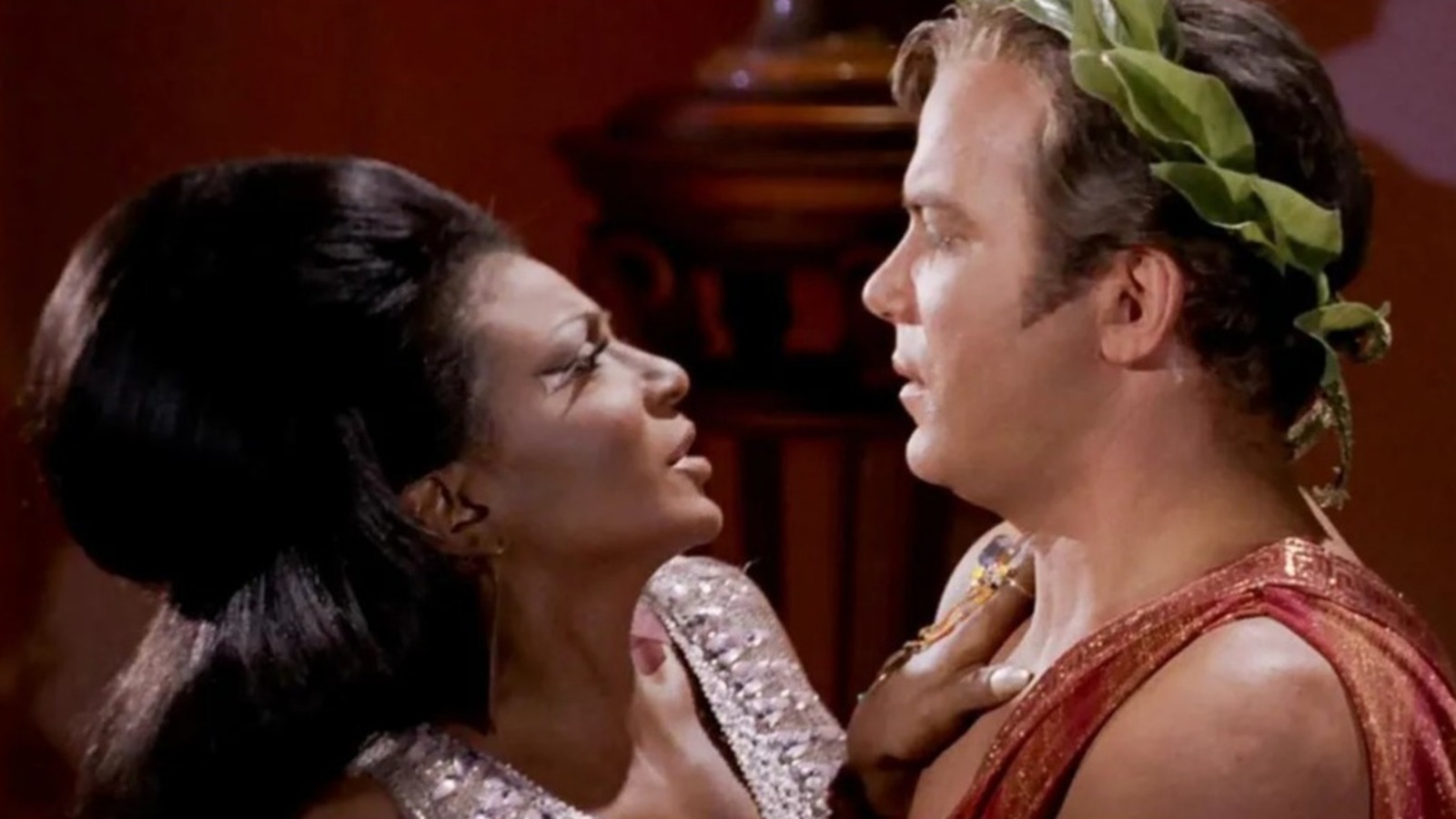
As far as groundbreaking moments on television go, you’d be hard pressed to find a better example than William Shatner and Nichelle Nichols kissing on a 1968 episode of “Star Trek.” But despite being the most famous early example of interracial kissing on television, it wasn’t the first. In fact, technically it wasn’t even the first time for Shatner.
In 1958, Shatner shared a kiss with Asian American actress France Nuyen while performing a scene from the play “The World of Suzie Wong” on “The Ed Sullivan Show.” Then in 1967, Shatner kissed BarBara Luna, who is half Filipino, on an earlier episode of “Star Trek.” There had also been several interracial kisses on television at the time that didn’t involve Shatner, including Lucille Ball smooching Desi Arnaz on “I Love Lucy” and Lloyd Bridges and Japanese actress Nobu McCarthy sharing a kiss on an episode of “Sea Hunt.”
Those examples, however, didn’t have the cultural impact of Shatner and Nichols, which was considered far more daring with America still dealing with upheaval surrounding the Civil Rights Movement and the fallout of Martin Luther King Jr.’s assassination just eight months prior. Shatner and Nichols are still generally considered the first Black and white actors to kiss on screen in a scripted show.
William Shatner and Nichelle Nichols’ kiss got an unexpected reaction
CBS
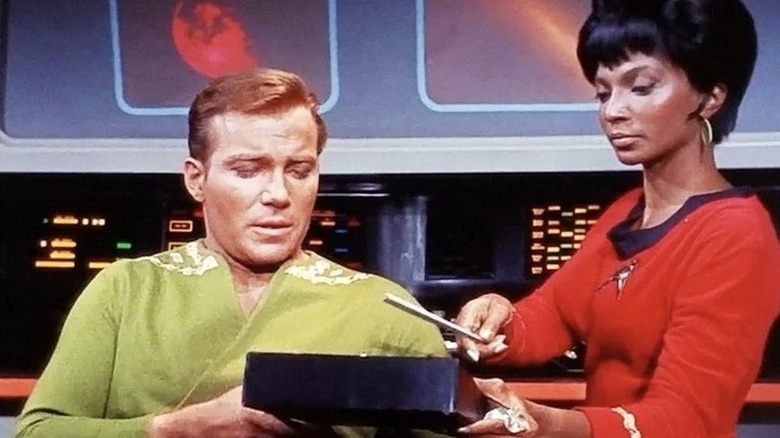
When filming the scene with William Shatner and Nichelle Nichols’ kiss, producers were concerned about offending television stations and viewers in the South. Simply creating Nichols’ character, Lieutenant Nyota Uhura, was groundbreaking all by itself. In 1967, the Supreme Court ruled interracial marriage legal, and it was still a hot-button issue in America a year later. However, Nichols, who was no stranger to breaking barriers, said after the episode aired the response was largely positive. “Apparently this was the largest [amount of] fan mail that Paramount had ever gotten on ‘Star Trek’ for one episode,” Nichols said in an interview with the Television Academy Foundation. “And they were just simply amazed.”
Professor of television and popular culture at Syracuse University Robert Thompson said the effects of the kiss are still being felt today. “It neither got the backlash one might have expected, nor did it open the doors for lots more shows to do this,” he told NBC. “The shot heard around the world started the American Revolution. The kiss heard around the world eventually did, but not immediately.”